


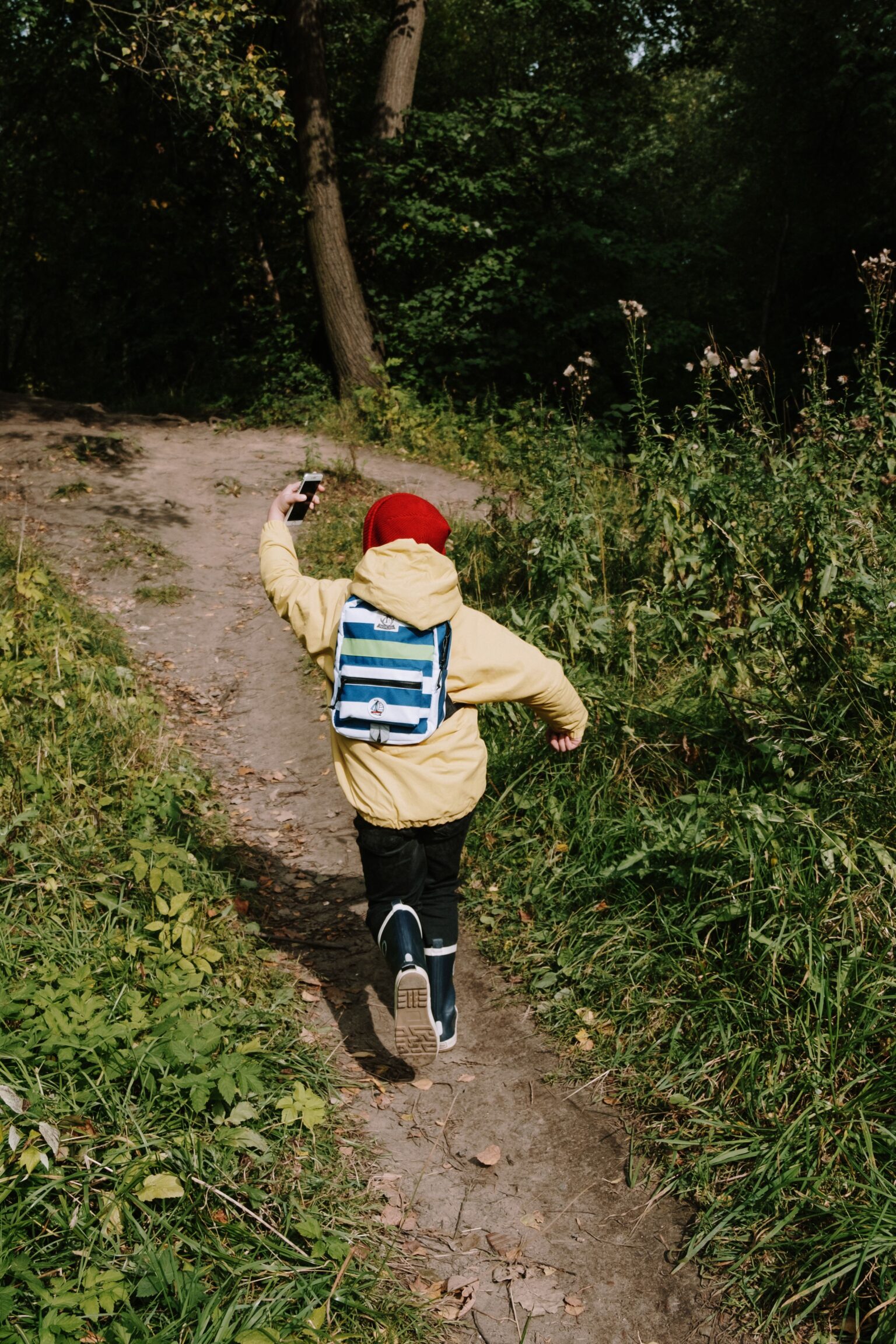
Toddler hiking boots should be lightweight, very flexible, and easy to get on and off. Toddlers need a sole that bends easily at the ball of the foot, because their feet are still developing and stiff soles interfere with how they learn to walk. Look for a wide toe box, hook-and-loop straps rather than laces, and a grippy rubber outsole. Size with about a thumb’s width of growing room. Honestly, most toddlers on family walks do not need dedicated hiking boots at all, and a flexible, grippy shoe is enough.
Toddler footwear follows different rules from adult and older-kid footwear. Flexibility beats support at this age, which is the opposite of what most people assume.
First: Does Your Toddler Need Hiking Boots?
Be realistic about how much a toddler actually walks.
| Scenario | What they need |
| Riding in a carrier most of the time | Warm, secure shoes. Not hiking boots |
| Toddling short sections on easy paths | Flexible trail shoes are plenty |
| Walking regularly on rough, rocky ground | Boots start to make sense |
| Wet, muddy, or cold family hikes | Waterproof boots are genuinely useful |
| Snow | Insulated waterproof boots |
Most toddlers on a family hike walk short bursts and ride the rest. If yours spends most of the trail in a carrier, spend your money on the carrier, not the boots.
Why Flexibility Matters More Than Support
This is the key difference from adult boots.
Toddlers are still developing their gait, their arches, and their foot muscles. A stiff, supportive boot restricts the natural foot movement that development depends on.
What that means practically:
- The sole should bend easily at the ball of the foot. Hold the boot and flex it. If it barely moves, it is too stiff for a toddler.
- Avoid rigid ankle support. Toddlers do not need it and it restricts natural movement.
- Lightweight matters enormously. A heavy boot on a toddler is a disproportionate load.
- Barefoot-style flexibility is fine for easy terrain and is often preferable.
The exception is genuinely rocky terrain, where sole protection against sharp stones becomes worth some added stiffness.
Fitting Toddler Boots
Toddlers cannot tell you reliably whether a shoe fits, which makes this harder.
Measure, Do Not Guess
- Measure both feet. They are often slightly different sizes. Fit to the larger one.
- Measure standing up, with weight on the foot, since feet spread under load.
- Measure often. Toddler feet can change size within a few months.
Check the Fit With the Boot On
- Thumb’s width at the toe. Press down to find the longest toe.
- Check the width. Toddler feet are typically wide and chubby. If the boot pinches at the widest point, it is the wrong shape.
- Check the heel. It should not slip loosely, but toddler boots do not need to grip like adult boots.
- Watch them walk. Curled toes, stumbling, or immediate refusal to walk usually means the fit is wrong.
Do Not Oversize
The temptation is worse with toddlers because they grow so fast. Resist it. Oversized boots on an unsteady walker cause falls.
Fastening: Straps Beat Laces
For this age, how the boot closes matters as much as how it fits.
- Hook-and-loop straps are the practical winner. Fast, adjustable, and a toddler can sometimes manage them alone.
- Elastic or bungee systems work well too.
- Traditional laces come undone, and a toddler cannot retie them. They also become a trip hazard.
Look for a wide opening as well. Getting a boot onto a wriggling toddler foot is a real, daily consideration.
Waterproof or Not?
For toddlers, waterproof is more often worth it than for adults, for one simple reason: toddlers walk directly into every puddle they see, on purpose.
Buy waterproof if you hike in wet, muddy, or cold conditions, or if your toddler is a committed puddle-stomper.
Skip waterproof if you hike mostly in dry heat, where breathability is more comfortable.
Either way, pack spare socks. It is the single most useful thing in a toddler hiking bag.
What About the Carrier?
If your toddler rides in a child carrier for most of the hike, their footwear needs change.
- Feet get cold in a carrier, because the child is not moving. Warmth matters more than grip.
- Boots can be uncomfortable against carrier footwells on a long ride.
- They still need shoes for the sections they walk, and for the inevitable demand to get down.
Warm, soft, easy-on shoes often serve better than proper boots in this case.
⚠️ YOUR PRODUCT PICKS GO HERE
Insert your tested recommendations with affiliate links. Suggested structure:
| Category | Your pick |
| Best overall toddler hiking boot | |
| Best waterproof pick | |
| Best lightweight flexible option | |
| Best for wide toddler feet | |
| Best easy-on design | |
| Best budget option |
For each, note the age or size range, how flexible the sole is, how easy it is to get on, and one honest drawback.
Brands making well-regarded toddler outdoor footwear include Merrell, KEEN, Stride Rite, Bogs, and See Kai Run. Verify current models and sizing before publishing, since toddler ranges change often.
Honest Advice on Spending
Toddler boots get outgrown fast and often barely worn.
- Do not buy premium. The boot will be outgrown before it wears out.
- Secondhand is a genuinely good option at this age, since toddler shoes are usually outgrown rather than worn through. Check the sole flex and the fastenings still work.
- Hand-me-downs are fine provided the sole has not compressed and the tread is intact.
- Buy for the season you are in, not the one after next.
FAQ
Do toddlers need hiking boots? Usually not, unless you hike regularly on rough, wet, or cold terrain. Most toddlers on family hikes walk short sections and ride the rest, so flexible, grippy shoes are enough. Boots become worthwhile for rocky ground, mud, or cold conditions.
What should I look for in toddler hiking boots? Flexibility first, since toddler feet are still developing and stiff soles restrict natural movement. Then light weight, a wide toe box, hook-and-loop straps rather than laces, a grippy rubber outsole, and a wide opening that makes them easy to put on.
How should toddler hiking boots fit? Leave about a thumb’s width of space at the longest toe, measured with the child standing. Fit to the larger foot, since toddler feet often differ slightly. Avoid oversizing, because loose boots cause falls in unsteady walkers.
Should toddler hiking boots have ankle support? Not rigid support. Toddlers are developing their gait and foot muscles, and stiff ankle support restricts the natural movement that development relies on. A flexible mid-cut boot that keeps debris out is plenty.
Are waterproof boots worth it for toddlers? Often yes, more so than for adults, because toddlers walk deliberately into puddles and mud. Waterproof boots keep them comfortable in wet conditions. In hot dry weather, breathable shoes are more comfortable. Either way, carry spare socks.
Your Next Step
Measure your toddler’s feet standing up, and be honest about how much they actually walk on your hikes. If they ride in a carrier most of the time, warm and easy-on shoes will serve you better than proper boots.
If they do walk real trail, prioritize a sole that flexes easily and straps they can manage. At this age, flexibility and ease of use beat support every time.