


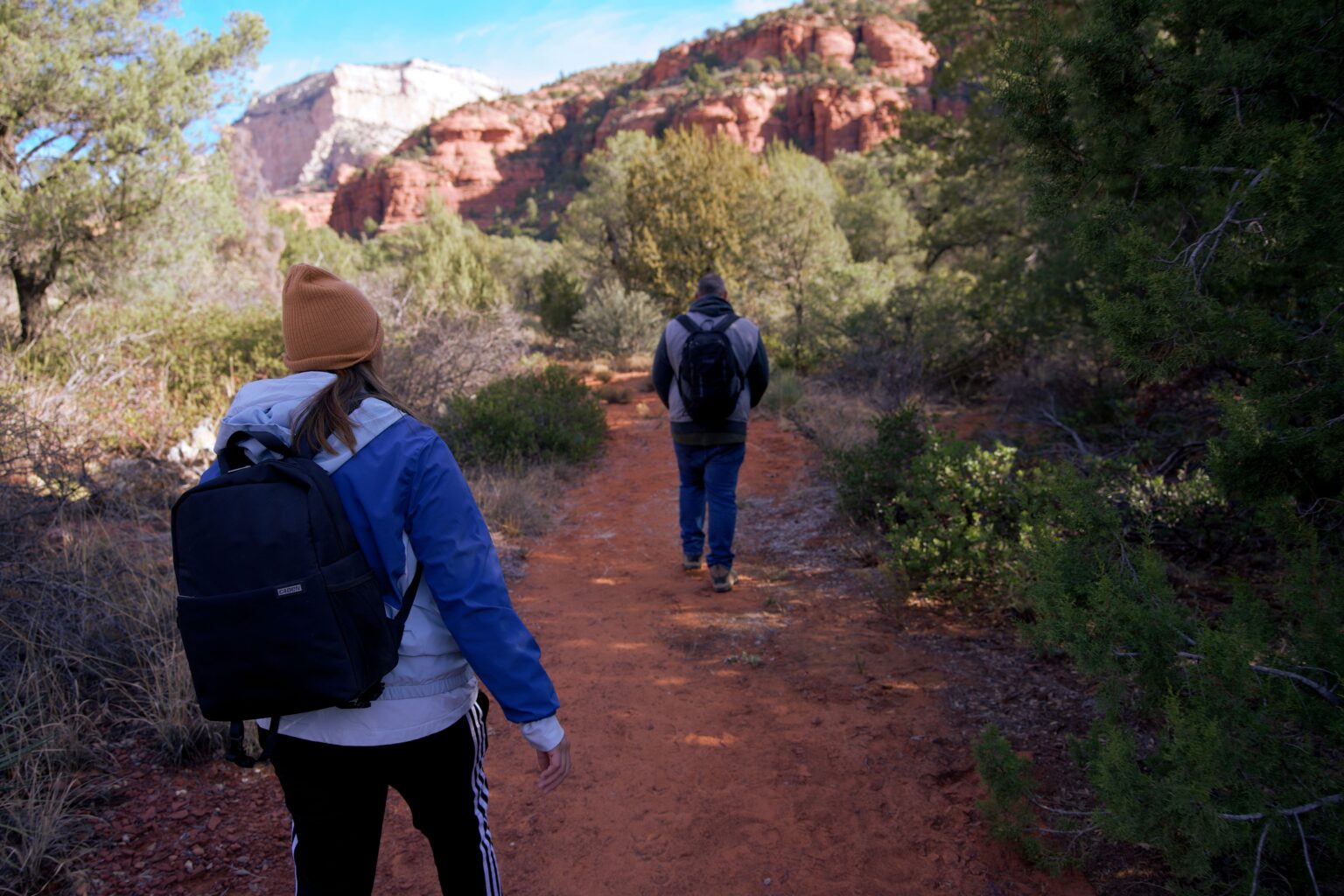
To plan a Sedona hiking trip for beginners, book three or four days in spring or fall, stay in West Sedona or the Village of Oak Creek, and start with Bell Rock Pathway, Fay Canyon, and Little Horse before attempting anything steep. Buy a Red Rock Pass, start every hike at sunrise, and carry two liters of water per person. Sedona’s trails are short, most under 5 miles, but they are rocky, steep, and completely exposed to the sun, which catches out more beginners than the distances ever do.
This is a full plan: when to go, where to stay, which trails in which order, and a three-day itinerary you can follow directly.
Step 1: Pick the Right Season
This matters more in Sedona than almost anywhere else.
| Season | Verdict for beginners |
| March to May | Best. Warm days, cool nights. Busy, so book early |
| September to November | Best. Same conditions, plus fall color at West Fork |
| December to February | Good. Cool and quiet, occasional snow. Short daylight |
| June to August | Avoid if possible. Dangerous midday heat |
If you can only travel in summer, you can still hike, but only at dawn. Be finished by 9am.
Step 2: Choose Where to Stay
Three areas, each with a tradeoff.
- West Sedona. Central, cheapest, closest to most trailheads. Best all-round choice for a hiking trip.
- Village of Oak Creek. South of town, quieter, closer to Bell Rock and Courthouse Butte.
- Uptown Sedona. Walkable shops and restaurants, more expensive, and traffic is heavy.
For a hiking-focused trip, West Sedona is the practical pick.
Step 3: Sort Out Parking Before You Arrive
This is the single biggest logistical problem in Sedona, and most first-timers do not plan for it.
- Buy a Red Rock Pass. Required at many trailheads. Available online or at machines on site.
- Trailheads fill by 8am in peak season. Some fill by 7am.
- Use the free shuttle where it runs. It serves several of the busiest trailheads and saves an hour of circling.
- Check the current shuttle routes on the official Coconino National Forest website, since they change season to season.
Step 4: Start With the Right Trails
Do not start with Cathedral Rock. It is short, which fools people, but it is a steep scramble.
Beginner-Friendly Trails
| Trail | Distance | Why it works for beginners |
| Bell Rock Pathway | 1 to 4 miles | Flat, wide, scenic. Go as far as you like |
| Fay Canyon | About 2.4 miles | Short, easy, some shade |
| Little Horse | About 4 miles | Gentle grade, excellent views |
| West Fork Oak Creek | About 7 miles | Long but flat and shaded |
| Courthouse Butte Loop | About 4 miles | Easy loop with constant views |
Step Up to These Next
| Trail | Distance | The challenge |
| Doe Mountain | About 1.5 miles | Short but steep switchbacks |
| Soldier Pass | About 4.5 miles | Moderate, with caves and a sinkhole |
| Boynton Canyon | About 6 miles | Longer, moderate, great scenery |
Save These for Last
- Cathedral Rock. Steep slickrock scrambling, using hands. Worth it, but not on day one.
- Devil’s Bridge. Not technically hard, but access and crowds make it a planning challenge.
- Bear Mountain. The hardest common hike in Sedona. Skip it on a first trip.
Step 5: A 3-Day Beginner Itinerary
Day 1: Get Your Legs Under You
- Morning: Bell Rock Pathway. Walk out and back as far as feels good. Easy, and it sets your expectations for terrain.
- Afternoon: Rest, or drive the Red Rock Scenic Byway.
- Evening: Airport Mesa for sunset. Arrive an hour early for parking.
Day 2: A Real Hike
- Sunrise: Soldier Pass or Boynton Canyon. Moderate distance, real scenery, manageable climbing.
- Afternoon: Rest. This is not laziness. Sedona afternoons are hot and you will hike better tomorrow.
- Evening: Uptown for dinner.
Day 3: The Iconic One
- Sunrise: Cathedral Rock. By now you know the terrain, and the early start beats the crowds and the heat.
- Late morning: West Fork of Oak Creek if you have energy, since it is shaded and flat.
- Afternoon: Drive home or fly out.
Why this order works. Each day is harder than the last, and the hardest hike comes when you are used to the rock. Doing Cathedral Rock on day one is how beginners get scared off Sedona entirely.
What to Pack
Essential:
- Two liters of water per person, minimum
- Hiking shoes or trail runners with real grip. Smooth soles slip on slickrock
- Sun hat, sunglasses, and sunscreen. Most trails have no shade at all
- Offline maps downloaded before you go, since signal drops in canyons
- Electrolyte tablets or salty snacks
Useful:
- Trekking poles for the steeper descents
- A light long-sleeve sun shirt, which beats sunscreen on exposed trails
- A small first aid kit
Leave at home: heavy backpacking gear. These are day hikes.
Beginner Mistakes to Avoid
- Judging trails by distance. A 1.2-mile Sedona trail can involve steep scrambling. Check elevation gain.
- Starting at 10am. By then the parking is gone and the rock is hot.
- Underestimating the sun. There is no shade. Sun exposure is the main hazard here, not terrain.
- Wearing new shoes. Slickrock punishes poor grip and blisters form fast.
- Skipping the Red Rock Pass. You can be ticketed at trailheads that require it.
FAQ
Is Sedona good for beginner hikers? Yes, very. Most famous trails are under 5 miles, and there are genuinely easy options like Bell Rock Pathway, Fay Canyon, and Little Horse. The challenge is heat and sun exposure rather than distance or technical terrain.
How many days do you need in Sedona for hiking? Three to four days is ideal. That is enough to do two or three real hikes with rest time between them, which matters because afternoons are hot and hiking two hard trails back to back is unpleasant for beginners.
What is the easiest hike in Sedona? Bell Rock Pathway is the easiest of the famous trails. It is flat, wide, and you can turn around whenever you like. Fay Canyon is another short, easy option with some shade.
Do I need a permit to hike in Sedona? Many trailheads require a Red Rock Pass, which you can buy online or on site. Some trailheads have separate fees. Check the official Coconino National Forest website before you travel, since the rules and shuttle routes change.
What should beginners avoid in Sedona? Do not start with Cathedral Rock, Devil’s Bridge, or Bear Mountain. Cathedral Rock involves steep scrambling, Devil’s Bridge has difficult access and heavy crowds, and Bear Mountain is a serious climb. Build up to them.
Your Next Step
Book three days in spring or fall, reserve a place in West Sedona, and buy a Red Rock Pass online before you leave.
Then set one alarm for each morning of your trip, and make it early. Sunrise starts solve parking, heat, and crowds all at once, and that single habit is what separates a good Sedona hiking trip from a frustrating one.