



Packing for a trip can be challenging, especially when you want to bring everything you need without carrying heavy bags. Overpacking can make your journey uncomfortable, increase baggage costs, and leave you struggling to organize your belongings. The good news is that a few simple strategies can make packing much easier.
This carry on packing guide explains how to choose essential items, organize your luggage, save space, and travel comfortably without unnecessary baggage. Whether you are planning a weekend getaway, a business trip, or a longer vacation, learning how to pack light can help you enjoy a more convenient travel experience.
With practical carry on luggage tips, a useful packing checklist, and minimalist travel strategies, you can prepare for your next journey with less stress and more confidence.
What Is Carry-On Packing?
Carry-on packing means organizing your travel essentials in a bag that you can take into the aircraft cabin, subject to your airline’s baggage rules. Depending on your ticket and airline, you may be allowed a cabin suitcase, a personal item, or both.
Unlike checked luggage, your carry-on stays with you during the flight, making essential items easier to access.
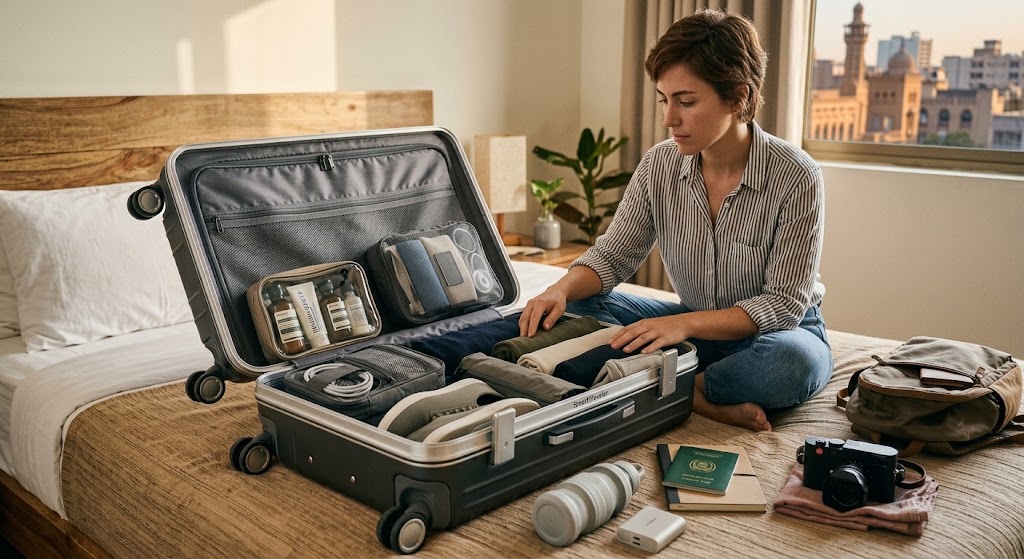
Benefits of Traveling With Carry-On Luggage
Traveling with a carry-on can make your journey simpler in several ways.
- Save time: You may avoid waiting at baggage claim.
- Reduce costs: You can avoid checked-baggage fees when your ticket includes an adequate cabin allowance.
- Stay organized: Keeping essential belongings together makes them easier to find.
- Travel comfortably: A lighter bag is easier to move through airports and hotels.
- Reduce baggage risks: You avoid some problems associated with delayed or lost checked baggage.
However, carry-on travel works best when you understand your airline’s size, weight, and restricted-item rules before departure.
1. Choose the Right Carry-On Bag
The first step toward successful packing is choosing a suitable bag. The best option depends on your trip length, destination, activities, and airline requirements.
Carry-On Suitcase vs. Travel Backpack
| Feature | Carry-On Suitcase | Travel Backpack |
|---|---|---|
| Best for | Business trips and city breaks | Flexible travel and short adventures |
| Organization | Often includes compartments | Depends on the backpack design |
| Mobility | Easy to roll on smooth surfaces | Convenient on stairs and uneven paths |
| Weight | Wheels and handles add weight | Often lighter without a frame |
| Accessibility | Easy to open and arrange | Depends on pockets and design |
Choose a bag that fits your belongings without exceeding the permitted dimensions or weight. Remember that airlines can have different rules, even for similar flights.
Look for Useful Features
A good carry-on bag should have durable zippers, comfortable handles or straps, and compartments for small items. A separate laptop section may be useful for business travelers, while compression straps can help secure clothing.
Avoid choosing a bag simply because it looks spacious. Its actual external dimensions, including wheels and handles, must meet your airline’s requirements.
2. Create a Carry On Packing List
A checklist helps you pack efficiently and avoid forgetting important items. Start with necessities, then add belongings based on the weather, activities, and duration of your trip.
Essential Carry-On Packing List
| Category | Items to Pack |
|---|---|
| Travel documents | Passport, identification, boarding pass, visa if required |
| Clothing | Shirts, trousers, underwear, socks, sleepwear |
| Toiletries | Toothbrush, toothpaste, deodorant, skincare |
| Electronics | Phone, charging cable, headphones |
| Health essentials | Necessary medication and basic personal supplies |
| Comfort items | Eye mask, earplugs, light sweater |
| Personal belongings | Wallet, keys, glasses |
| Travel accessories | Reusable empty water bottle, packing cubes |
Use this carry on packing list as a starting point rather than packing every item automatically. Remove anything you do not expect to use.
Keep Important Items Accessible
Travel documents, valuables, essential medication, and electronics should generally stay in your personal item or another permitted cabin bag. This makes them easier to access and reduces the risk of losing access to essential belongings if checked luggage is delayed.
Always follow airport security requirements for medications, batteries, liquids, and other restricted items.
3. Plan Your Outfits Before Packing
Clothing often takes up the largest amount of space in a travel bag. Planning outfits in advance helps prevent overpacking.
Choose Versatile Clothing
Select items that can be worn in different combinations. Neutral colors such as black, white, gray, navy, and beige often work well together.
For example, one pair of trousers might match several shirts, while a lightweight jacket can work with multiple outfits.
Use the Outfit Planning Method
Before packing, consider your itinerary and the weather forecast.
- Choose an outfit for each planned activity.
- Select clothing that can be mixed and matched.
- Limit extra shoes because they occupy valuable space.
- Pack layers instead of bulky items when appropriate.
- Include one practical spare outfit for unexpected situations.
For a weekend trip, you might need two or three everyday outfits, sleepwear, underwear, socks, and one extra layer. Adjust this list to suit your destination and personal needs.
4. Use Space-Saving Packing Techniques
Effective packing techniques help you fit essentials into a smaller bag without making it difficult to find things.
Rolling vs. Folding Clothes
Rolling clothes can make small items easier to arrange and organize. Folding may work better for structured garments, delicate fabrics, and clothing that wrinkles easily.
Neither method is universally best. Try both approaches and choose the one that works for your clothes and bag.
Use Packing Cubes
Packing cubes separate clothing into categories, such as tops, bottoms, underwear, and sleepwear. They can make unpacking easier and help keep your luggage organized.
Compression cubes may reduce the volume of soft clothing, but they do not reduce the bag’s actual weight. Check that your packed bag still fits airline restrictions.
Fill Small Spaces Carefully
Place socks or other suitable soft items inside shoes to use available space. Keep shoes in a separate bag to prevent dirt from touching clean clothing.
Avoid forcing items into every gap if doing so makes your bag difficult to close or access.
5. Follow Airline Rules for Liquids and Toiletries
Toiletries require special attention because airport security rules may restrict the amount and packaging of liquids in cabin baggage.
Pack Toiletries Efficiently
Choose travel-size products and pack only what you expect to use. Solid alternatives, such as a solid shampoo bar, may help reduce the number of liquid containers.
For airports applying the common 100 ml liquid-container rule, each container must generally hold no more than 100 ml, and containers must fit within the required transparent resealable bag. Rules, exemptions, and screening technology differ between airports, so verify the requirements for your departure and connecting airports.
Toiletry Packing Checklist
- Toothbrush and toothpaste.
- Deodorant permitted under applicable rules.
- Small skincare products.
- Travel-size shampoo and conditioner, if needed.
- Sunscreen suitable for your destination.
- Basic personal hygiene products.
Place liquids in a leak-resistant bag and secure their lids. Do not assume a half-empty large bottle is allowed simply because little liquid remains inside.
6. Pack Electronics and Travel Accessories Wisely
Electronics can be essential, but cables, chargers, and accessories can quickly make your bag cluttered.
Essential Electronics
For most travelers, a phone and its charging cable are enough. Depending on your plans, you may also need a laptop, tablet, camera, or headphones.
Keep your devices protected and organize cables with a small pouch. Avoid packing duplicate chargers unless you genuinely need them.
Understand Battery Restrictions
Power banks and spare lithium batteries are generally subject to cabin-baggage requirements and are often prohibited in checked baggage. Capacity limits, approval requirements, and procedures vary by airline and aviation authority.
Check your airline’s current rules before traveling, particularly if you carry a high-capacity power bank. Keep batteries protected from short circuits and follow crew instructions during the flight.
7. Learn How to Pack Light for Different Trips
Packing needs change depending on the length and purpose of your journey. The best minimalist travel approach is to bring enough for your plans without carrying unnecessary extras.
Weekend Getaways
For a two- or three-day trip, focus on versatile clothing, essential toiletries, travel documents, and electronics. Wear your bulkiest suitable shoes and jacket during transit when practical.
Business Trips
Choose wrinkle-resistant clothing and outfits that can work for meetings and casual activities. Keep your laptop, charger, documents, and any necessary presentation materials organized.
Longer Vacations
A longer vacation does not always require more luggage. If laundry facilities are available, you can pack fewer clothing items and wash them during your trip.
For outdoor adventures, cold destinations, or trips requiring specialist equipment, prioritize safety and appropriate clothing over reducing baggage at all costs.
8. Avoid Common Carry-On Packing Mistakes
Even experienced travelers can pack inefficiently. Avoiding a few common mistakes can save time and prevent problems at the airport.
Packing Too Many Clothes
Extra outfits often remain unused throughout a trip. Review your itinerary and remove clothing that does not match your planned activities.
Ignoring Bag Weight
A bag may fit within the permitted dimensions but still exceed the airline’s weight limit. Weigh your luggage at home if your airline imposes a cabin-bag weight restriction.
Forgetting Restricted Items
Sharp objects, certain tools, flammable substances, and other items may be prohibited or restricted. Check official security guidance before packing unfamiliar items.
Packing Everything in One Compartment
Mixing chargers, toiletries, documents, and clothing makes essentials difficult to locate. Use separate pouches or compartments to keep items organized.
Forgetting Weather Conditions
A lightweight packing strategy should still prepare you for the destination. Check expected temperatures and rain conditions before choosing clothing.
9. Final Carry-On Packing Checklist Before Leaving
Review this checklist before heading to the airport.
- Passport, identification, and required travel documents packed.
- Boarding pass downloaded or printed.
- Airline cabin-baggage dimensions and weight checked.
- Clothing selected according to the itinerary.
- Toiletries packed according to security rules.
- Medication and essential personal items accessible.
- Phone and necessary electronics charged.
- Power bank packed according to airline rules.
- Restricted items removed.
- Bag closed securely and weighed if necessary.
- Home, transport, and accommodation arrangements confirmed.
A final review can help you avoid last-minute repacking and make your airport experience more comfortable.
Frequently Asked Questions (FAQs)
1. What should I pack in my carry-on bag?
Pack travel documents, valuables, essential medication, a phone charger, suitable clothing, and personal items you may need during the journey. Follow all airline and airport restrictions.
2. How do I pack light for a week-long trip?
Choose versatile clothing, plan outfits in advance, limit shoes, use packing cubes, and consider doing laundry during the trip. Adjust your packing list for the climate and planned activities.
3. Are packing cubes worth using?
Yes, packing cubes can help separate clothing, improve organization, and make items easier to find. Compression versions may reduce the space occupied by soft clothing, but they do not reduce its weight.
4. Can I carry toiletries in my carry-on luggage?
Yes, but liquids, gels, creams, and aerosols may be subject to airport security restrictions. Check the specific rules for your departure and connecting airports before packing.
5. Is a backpack better than a carry-on suitcase?
A backpack can be convenient for flexible travel, stairs, and uneven surfaces. A suitcase may be easier to organize and roll through airports. Your travel style and airline limits should guide your choice.
6. Can I bring a power bank on a plane?
Power banks are generally carried in the cabin rather than checked baggage, but capacity and operating restrictions apply. Verify the current requirements with your airline and relevant aviation authority.
7. How can I prevent my carry-on bag from becoming too heavy?
Pack only necessary items, choose lightweight clothing, limit duplicate accessories, and weigh your bag before departure. Remember that some airlines impose strict cabin-baggage weight limits.
8. What is minimalist travel?
Minimalist travel means taking only the items you need and choosing belongings that serve multiple purposes. It focuses on convenience, practical planning, and reducing unnecessary baggage rather than traveling without essentials.
Conclusion
Packing efficiently can make any trip more comfortable, whether you are traveling for a weekend or planning a longer vacation. The key is to prioritize essentials, select versatile clothing, organize small items, and understand your airline’s baggage restrictions.
By following these carry on luggage tips, you can save space, avoid common packing mistakes, and move through airports with greater confidence. Use the carry on packing list before departure, check current security requirements, and adjust your belongings to suit your destination.
A well-organized bag does not need to contain everything you own. It simply needs to contain what you need for a smooth, enjoyable journey.