


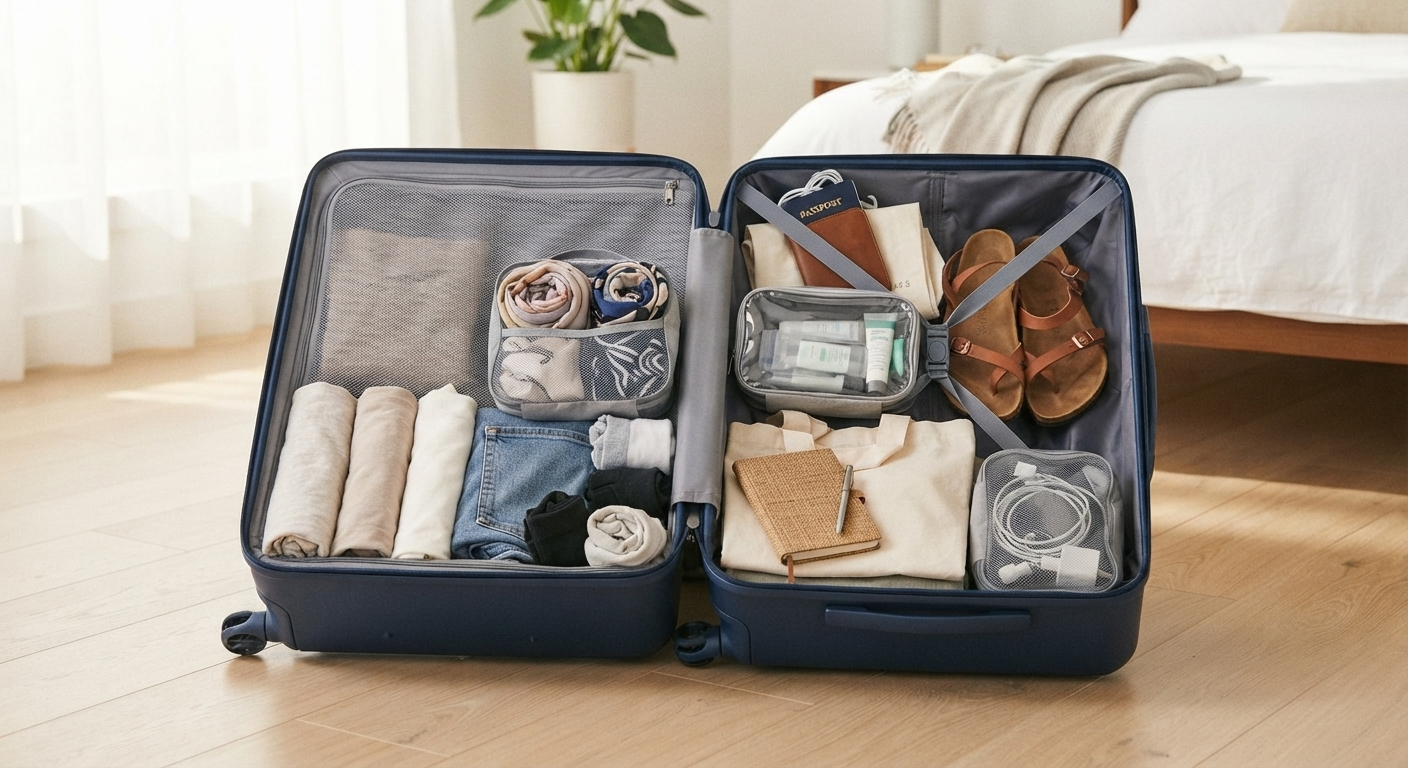
Packing for a trip can be exciting, but it can also become stressful when you are unsure what to take. Many travelers pack too many clothes, unnecessary accessories, and items they never use. The result is usually a heavy suitcase, limited space, and more hassle during the journey.
The good news is that smart packing does not have to be complicated. With the right travel packing tips, you can organize your luggage, save space, and make your trip more comfortable. Whether you are planning a short weekend getaway or a longer vacation, learning how to pack light can make traveling much easier.
In this guide, you will find practical packing tips for travelers, useful minimalist travel packing ideas, and simple ways to organize your suitcase without leaving important items behind.
Why Smart Packing Matters
Good packing is more than simply putting everything into a suitcase. It is about choosing items carefully and organizing them in a way that makes them easy to find.
A well-packed bag can help you:
- Save luggage space
- Avoid overweight baggage fees
- Find your belongings quickly
- Reduce travel stress
- Move easily between destinations
- Keep clothes organized
- Avoid carrying unnecessary items
The goal is not to pack as little as possible. The goal is to pack only what you are likely to use.
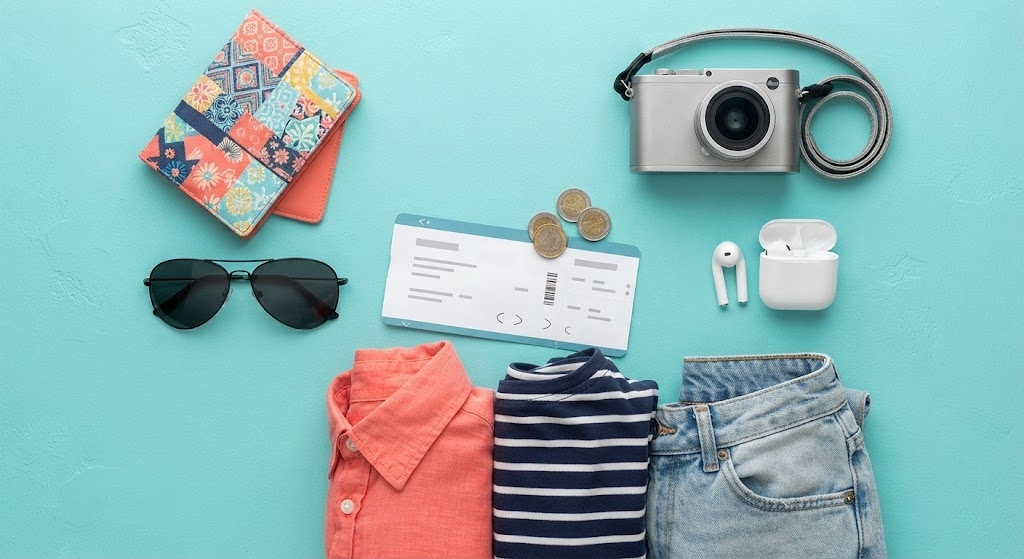
10 Travel Packing Tips to Make Your Trip Easier
1. Make a Packing List First
One of the easiest travel packing tips is to create a packing list before you open your suitcase.
Write down everything you think you need and then review the list. Separate essential items from things that would simply be nice to have.
A basic list can include:
- Clothing
- Shoes
- Toiletries
- Travel documents
- Electronics
- Medications
- Chargers
- Personal essentials
Making a list prevents last-minute packing and reduces the chance of forgetting important items.
2. Check the Weather Before Packing
Always check the expected weather at your destination before deciding what clothes to bring.
If the weather is warm, you may need lightweight clothing, comfortable shoes, and sun protection. For colder destinations, layers, jackets, and warmer accessories may be necessary.
Checking the weather also helps you avoid packing clothes that you will never wear.
3. Choose Versatile Clothing
One of the best ways to learn how to pack light is to choose clothes that can be worn in multiple ways.
For example, a neutral shirt can work with different trousers or jeans. A lightweight jacket can be used during the day and evening. Neutral colors also make it easier to create different outfits from fewer pieces.
Instead of packing a separate outfit for every day, choose clothing that can be mixed and matched.
4. Use the Right Number of Shoes
Shoes can take up a surprising amount of suitcase space. Try to limit yourself to two or three pairs depending on your destination and activities.
A comfortable everyday pair can handle sightseeing, while another pair may be useful for formal occasions or specific activities.
Wear your heaviest shoes during travel whenever possible. This saves valuable luggage space.
5. Roll or Fold Clothes Strategically
There is an ongoing debate about whether rolling or folding clothes is better. In reality, both methods can work depending on the type of clothing.
Rolling can be useful for casual shirts, T-shirts, and lightweight clothes. Folding may work better for structured garments, jackets, or items that wrinkle easily.
You can also combine both methods to make better use of your suitcase.
6. Pack Toiletries in Small Containers
You rarely need full-size bottles of shampoo, lotion, or other personal-care products for a short trip.
Use travel-size containers whenever possible. Place liquids in a suitable toiletry bag to keep them organized and prevent leaks from spreading through your luggage.
This is one of the simplest packing tips for travelers who want to save both space and weight.
7. Keep Important Items Accessible
Some belongings should never be buried at the bottom of your suitcase.
Keep your passport, identification, wallet, travel documents, medications, phone, and essential chargers somewhere easy to reach.
If you are traveling by air, keep important documents and essential personal items in your carry-on rather than checked luggage.
8. Use Packing Cubes
Packing cubes can make your suitcase much easier to organize.
You can use separate cubes for:
- Tops
- Bottoms
- Underwear
- Sleepwear
- Accessories
- Children’s clothing
Packing cubes are especially useful for longer trips or family vacations because they help keep different categories together.
9. Leave Some Empty Space
Do not fill your suitcase completely before leaving home.
Leaving some extra space is useful if you plan to buy souvenirs, clothes, gifts, or other items during your trip.
A suitcase that is already full can also become difficult to close when you return.
10. Review Everything Before You Leave
After packing, take a few minutes to review your luggage.
Ask yourself:
- Will I actually use this?
- Can I take a smaller version?
- Can one item serve multiple purposes?
- Do I really need another pair of shoes?
- Is there anything I can remove?
This final review is an important part of minimalist travel packing.
Travel Packing Tips at a Glance
| Packing Area | Smart Approach | Space-Saving Idea |
|---|---|---|
| Clothing | Choose versatile pieces | Mix and match outfits |
| Shoes | Pack only essential pairs | Wear the heaviest pair |
| Toiletries | Use travel-size containers | Avoid full-size bottles |
| Electronics | Take only necessary devices | Share chargers when possible |
| Accessories | Choose practical items | Avoid duplicates |
| Documents | Keep them accessible | Use a document pouch |
| Organization | Separate categories | Use packing cubes |
| Extra Space | Do not overfill | Leave room for purchases |
How to Pack Light Without Forgetting Essentials
Learning how to pack light does not mean leaving important things behind. Instead, it means making smarter choices.
Start by thinking about your destination, trip length, activities, and accommodation.
For example, a three-day city break does not usually require the same amount of clothing as a two-week vacation. Similarly, a beach vacation requires different items from a winter mountain trip.
Try creating a simple outfit plan before packing. If you know which clothes work together, you can avoid bringing unnecessary options.
Another useful strategy is to pack items that serve multiple purposes. A lightweight scarf, for example, can sometimes work as an accessory, a cover-up, or an extra layer.
Minimalist Travel Packing: What Should You Leave Behind?
Minimalist travel packing is based on the idea of taking fewer but more useful items.
Common items travelers can often leave behind include:
- Too many pairs of shoes
- Excessive accessories
- Large toiletries
- Clothes for unrealistic situations
- Duplicate electronics
- Items that are easily available at the destination
Before packing something, ask yourself whether it is essential or simply something you might use.
If you are unsure, consider leaving it behind. You can always buy certain basic items at your destination if necessary.
Packing Tips for Different Types of Trips
Weekend Trips
For a short trip, focus on the basics. A small carry-on or backpack may be enough for clothing, toiletries, electronics, and documents.
Business Trips
Choose clothing that can work for meetings and casual activities. Keep electronics, documents, and chargers organized and easy to access.
Family Vacations
Families should divide luggage into categories. Each person can have a packing cube or designated section for their clothing and personal items.
Adventure Trips
For outdoor travel, prioritize practical clothing, comfortable footwear, weather protection, and activity-specific equipment.
Common Packing Mistakes to Avoid
Even experienced travelers can make packing mistakes. Avoid these common problems:
Overpacking
Taking too many clothes is one of the most common mistakes. More options do not always mean a better trip.
Ignoring Luggage Restrictions
If you are flying, check your airline’s baggage allowance before leaving home. Different airlines and ticket types can have different rules.
Packing Without a Plan
Putting items into a suitcase randomly makes it harder to stay organized.
Forgetting Essential Documents
Your passport, identification, tickets, booking information, and other important documents should be checked before leaving.
Filling Every Empty Space
An extremely full suitcase can be difficult to close and leaves no room for anything you purchase during the trip.
A Simple Packing Checklist for Travelers
Use this quick checklist before leaving:
Documents
- Passport or identification
- Tickets and booking details
- Travel insurance information
- Payment cards and some cash
Clothing
- Tops
- Bottoms
- Underwear
- Sleepwear
- Jacket or layers
- Comfortable shoes
Personal Items
- Toiletries
- Medications
- Glasses or contact lenses
- Personal-care products
Technology
- Phone
- Charger
- Power bank if needed
- Necessary electronic devices
Final Check
- Check the weather
- Check baggage limits
- Secure important items
- Remove unnecessary belongings
- Leave some extra luggage space
Frequently Asked Questions
What are the best travel packing tips for beginners?
The best travel packing tips for beginners are to make a list, check the weather, choose versatile clothing, limit shoes, use travel-size toiletries, and review your luggage before leaving.
How can I pack light for a long trip?
To pack light, choose clothes that can be mixed and matched, reduce the number of shoes, use small toiletries, and avoid packing items that you may not actually use.
Is minimalist travel packing better?
Minimalist travel packing can make travel easier because you carry less weight and spend less time organizing your belongings. The key is to pack fewer useful items rather than simply packing as little as possible.
Should I roll or fold my clothes?
Both methods can work. Rolling is useful for many casual clothes, while folding may be better for structured or wrinkle-prone garments. You can also use a combination of both.
How many pairs of shoes should I pack?
For many trips, two or three pairs are enough. The exact number depends on your destination, activities, and trip length.
Conclusion
Smart packing can make a major difference to your overall travel experience. By creating a list, checking the weather, choosing versatile clothing, limiting shoes, organizing toiletries, and leaving extra space, you can make your luggage easier to manage.
The best travel packing tips are not about taking the smallest possible suitcase. They are about taking the right things and avoiding unnecessary items. With a little planning and minimalist travel packing, you can travel lighter, stay organized, and enjoy your trip with less stress.
Before your next journey, take a few minutes to plan what you genuinely need. A lighter and better-organized bag can make every stage of your trip more comfortable.