


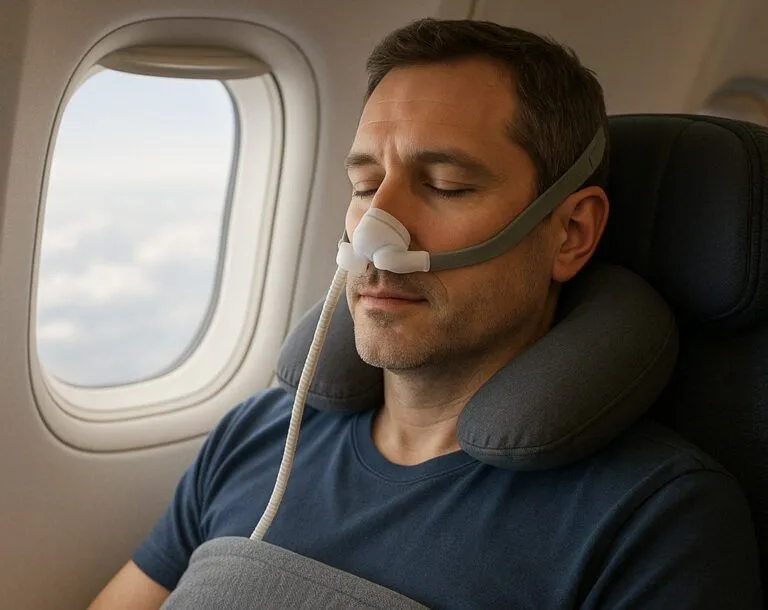
Yes, you can bring a travel CPAP machine on a plane. The TSA treats it as a medical device, so it does not count toward your carry-on limit, and it’s allowed in the cabin on every domestic flight. You just need to pack it right and know a few rules before you go. Below, we cover TSA screening, battery limits, and what makes a travel CPAP different from your home machine.
What Is a Travel CPAP Machine?
A travel CPAP machine is a smaller, lighter version of a standard CPAP. It does the same job, delivering steady air pressure to keep your airway open while you sleep. The difference is size and portability.
Most travel CPAP machines weigh under 1 pound, compared to 2 to 3 pounds for a standard home unit. Some skip the water humidifier entirely and use waterless humidification instead, which means less to pack and less to clean.
You don’t need to buy a travel CPAP to fly. Your regular home machine is allowed too. A dedicated travel unit just makes frequent trips lighter and simpler.
Is a Travel CPAP Machine Allowed on Planes?
Yes. The TSA lists CPAP, BiPAP, and APAP machines as approved medical devices. Because of this, they’re allowed in addition to your normal carry-on and personal item, not counted as one of them.
Here’s what actually happens at security:
- You’ll need to take the machine out of its carrying case for X-ray screening.
- Tubing and masks can usually stay inside the case.
- TSA officers may swab the outside of the machine to check for residue. This is routine and takes under a minute.
- You can ask for a hand inspection instead of X-ray if you prefer, just tell the agent before your bin goes through.
How to Pack a Travel CPAP Machine
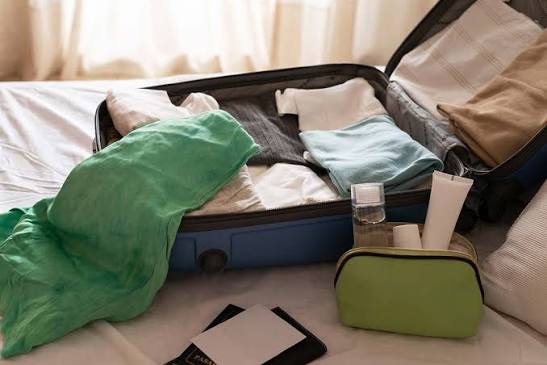
Keep It in Your Carry-On, Not Checked Luggage
This is the most important travel rule. Checked bags get thrown around, and cargo holds go through temperature swings that home electronics aren’t built for. If your bag is lost or delayed, you could be without therapy for days. Always keep your travel CPAP with you in the cabin.
Empty the Humidifier Before You Leave Home
If your travel CPAP has a water humidifier, drain it completely the night before your flight, not at the security line. Leftover water in the chamber falls under the standard liquid rule, and TSA may ask you to empty it at the checkpoint, which slows you down.
Bring Distilled Water the Right Way
Distilled water for your CPAP follows normal TSA liquid limits:
- In your carry-on: bottles up to 3.4 oz (100 ml)
- In checked luggage: full-size bottles are fine, no size limit
- After security: many airport pharmacies and shops sell distilled water at your gate area
Organize Supplies for Faster Screening
Pack your mask, tubing, and filters in clear zip-top bags. This makes the screening process faster and keeps your gear clean. A “Medical Equipment” tag on your CPAP bag can also help agents recognize it right away.
Can You Use a CPAP During the Flight?
Yes, if your seat has a working power outlet and your battery or plug can handle it.
A few practical facts to know:
- Airplane outlets usually put out around 75 watts. Most CPAP machines need 30 to 60 watts without the heated humidifier, so this is normally enough.
- Turn off the heated humidifier and heated tube during the flight. This keeps your machine within the outlet’s power limit.
- Not every seat has a power outlet. Check your airline’s seat map or call ahead if in-flight use matters to you.
- A battery backup is a good idea if you’re not sure about outlet access.
Battery Rules for Travel CPAP Machines
If you’re bringing a portable battery for your CPAP, the FAA sets clear watt-hour (Wh) limits:
- Under 100Wh: Allowed in carry-on, no airline approval needed
- 100 to 160Wh: Allowed in carry-on, but you need airline approval first
- Over 160Wh: Not allowed on commercial flights
Lithium batteries should always go in carry-on luggage, never in checked bags.
Flying Internationally With a Travel CPAP Machine
Most modern travel CPAP machines are dual-voltage, meaning they work on both US (120V) and international (220-240V) power without needing a converter. Check the label on your power supply to confirm before you travel.
A few more things to prepare:
- Bring a plug adapter for the country you’re visiting, since voltage often works fine but the plug shape won’t match.
- Carry a copy of your prescription or a short doctor’s note. TSA doesn’t require this in the US, but some airlines and other countries do ask for it.
- Expect security procedures to vary outside the US. Give yourself extra time at international checkpoints.
FAQ
Does a travel CPAP machine count as a carry-on item? No. The TSA and most US airlines classify CPAP machines as medical devices. You can bring one in addition to your standard carry-on bag and personal item, at no extra cost.
Do I need a doctor’s note to fly with a CPAP machine? TSA does not require one for domestic US flights. That said, some airlines and international destinations may ask for proof of medical necessity, so it’s smart to carry a copy of your prescription just in case.
Can I bring CPAP batteries on a plane? Yes. Batteries under 100 watt-hours are allowed in carry-on without airline approval. Batteries between 100 and 160 watt-hours need airline approval first. Anything over 160 watt-hours is not permitted on commercial flights.
Should I check my CPAP machine or carry it on? Always carry it on. Checked luggage can be lost, delayed, or exposed to temperature extremes that can damage the machine’s motor and electronics. Keeping it with you protects both the device and your therapy schedule.
Before You Go
A travel CPAP machine makes flying with sleep apnea therapy manageable, not stressful. Pack it in your carry-on, empty the humidifier the night before, and check your battery’s watt-hour rating if you’re bringing one. A few minutes of prep at home is all it takes for a smooth trip through security.