


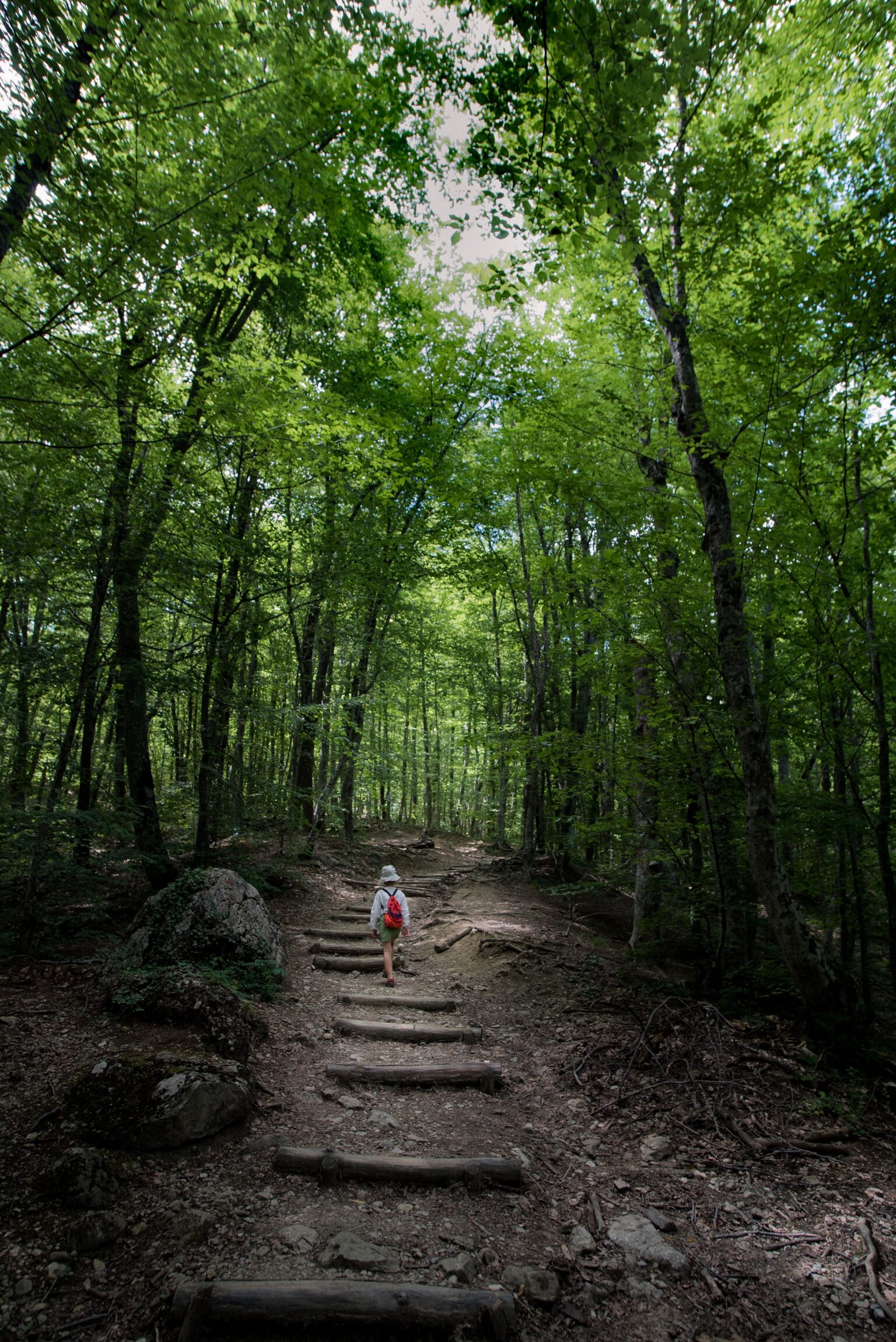
The best Malibu hiking trails are Escondido Falls, Solstice Canyon, Point Dume, and the Backbone Trail. Escondido Falls leads to the tallest waterfall in the Santa Monica Mountains. Solstice Canyon is a shaded creek walk past the ruins of a burned mansion. Point Dume is a short cliff climb with whale watching in season. The Backbone Trail is the long spine route across the whole range. Malibu’s trails run through the Santa Monica Mountains where they meet the Pacific, so most hikes give you canyon on one side and ocean on the other.
Malibu hiking is defined by three things: ocean views, chaparral with very little shade, and parking that fills early along the Pacific Coast Highway.
Quick Trail Comparison
| Trail | Distance | Difficulty | Best for |
| Point Dume | About 1 mile | Easy | Cliff views, whale watching |
| Solstice Canyon | About 3.2 miles | Easy to moderate | Shade, creek, ruins |
| Escondido Falls | About 3.8 miles | Moderate | Tallest local waterfall |
| Corral Canyon Loop | About 2.5 miles | Moderate | Ocean and canyon views |
| Zuma Ridge Trail | About 6 miles | Strenuous | Big climb, wide views |
| Charmlee Wilderness | About 3 miles | Easy | Meadows, ocean overlook |
| Malibu Creek State Park | About 5 miles | Easy to moderate | Rock pool, film locations |
| Backbone Trail (sections) | Varies, 67 miles total | Varies | Long-distance ridge route |
| Nicholas Flat | About 5 miles | Strenuous | Pond, ridge views |
| Sandstone Peak | About 6 miles | Strenuous | Highest point in the range |
| Grotto Trail | About 3 miles | Moderate | Boulder grotto, rocky |
The Big Four
1. Escondido Falls
The most popular waterfall hike in Malibu, about 3.8 miles round trip to a multi-tiered fall, the tallest in the Santa Monica Mountains.
The flow depends entirely on recent rain. In dry months and drought years, the falls can be a trickle or nothing at all. Go in winter or spring after rain.
The route to the upper falls involves steep, slippery scrambling and has caused injuries. The lower falls are the sensible destination for most people.
2. Solstice Canyon
The best shaded hike in Malibu, which matters in a place with so little tree cover. A gentle 3.2-mile loop follows a creek past the stone ruins of a house that burned decades ago.
Family-friendly, popular, and one of the few Malibu trails that is comfortable in warm weather.
3. Point Dume
Short and spectacular. About a mile of trail up onto a headland with cliff views along the coast in both directions.
In winter and early spring it is one of the best land-based whale watching spots in Southern California, as gray whales migrate past. Bring binoculars.
Parking is very limited. Arrive early.
4. Sandstone Peak
The highest point in the Santa Monica Mountains, reached on about a 6-mile loop with panoramic views over the ocean, the range, and inland valleys on clear days.
A real climb with limited shade. Start early.
The Backbone Trail
The Backbone Trail runs roughly 67 miles along the spine of the Santa Monica Mountains, from Point Mugu to Will Rogers State Historic Park.
Most people hike it in sections rather than end to end. Popular Malibu-area segments connect through Corral Canyon, Zuma Ridge, and Sandstone Peak. It is the backbone of hiking here in every sense, and many shorter trails connect to it.
Fire, Regrowth and Closures
This matters in Malibu more than in most places.
- Wildfire is a recurring reality in the Santa Monica Mountains, and trails, parks, and roads close during and after fires.
- Some areas are still regrowing from past fires, meaning less shade and visible burn scars.
- Always check current trail status with California State Parks or the National Park Service before you drive out. Closures can be sudden.
- Red flag warning days mean high fire danger and hiking is a bad idea.
Parking and Access
Parking is the most common frustration on a Malibu hike.
- Many trailheads sit right on the Pacific Coast Highway with very limited spots.
- Popular lots fill by mid-morning on weekends.
- Some lots charge a fee, others are free but small.
- Read the signs carefully. Parking restrictions along PCH are enforced and tickets are common.
Weekday mornings solve most of this.
When to Hike in Malibu
| Season | Conditions |
| Winter (December to February) | Best. Green hills, waterfalls flowing, whale season, cool temperatures |
| Spring (March to May) | Excellent. Wildflowers, green, mild |
| Summer (June to August) | Hot and dry with little shade. Morning marine layer can help |
| Fall (September to November) | Hot, dry, and the highest fire risk of the year |
Winter and spring are the best seasons, which is the opposite of most US hiking. Southern California’s rain comes in winter, so that is when the hills are green and the waterfalls run. Late summer and fall are dry, brown, and carry the greatest fire risk.
What to Bring
- Plenty of water. Chaparral offers almost no shade.
- Sun protection, essential on the exposed ridge trails.
- Grippy shoes, especially for the rocky scrambles near waterfalls.
- Binoculars for whale season at Point Dume.
- A backup trail plan, in case your first choice is closed.
FAQ
What is the best hike in Malibu? Solstice Canyon is the best all-round hike, being shaded, gentle, and scenic at about 3.2 miles. Point Dume is the best short hike, with cliff views and whale watching in winter. Escondido Falls is the best waterfall hike, though it depends on recent rain.
When is the best time to hike in Malibu? Winter and spring, which is the reverse of most of the country. Southern California’s rain falls in winter, so that is when the hills are green and the waterfalls flow. Summer and fall are hot, dry, and carry high fire risk.
Is there shade on Malibu hiking trails? Very little. Most trails run through chaparral, which is low scrub with no tree cover. Solstice Canyon is the main exception, following a shaded creek. On every other trail, plan for full sun and carry extra water.
Can you see whales while hiking in Malibu? Yes. Point Dume is one of the best land-based whale watching spots in Southern California, particularly during the gray whale migration in winter and early spring. Bring binoculars and scan the water from the headland.
Do Malibu trails close? Yes, and it happens regularly. Wildfire is a recurring risk in the Santa Monica Mountains, and trails and roads close during and after fires. Always check the current status with California State Parks or the National Park Service before driving out.
Your Next Step
Check trail status and the fire forecast before you leave, then aim for a weekday morning to solve the parking problem that catches out most visitors.
If it is winter or spring, hike Escondido Falls while the water is actually running, and finish at Point Dume to scan for whales. That pairing shows you the two things Malibu hiking does better than anywhere else nearby.