


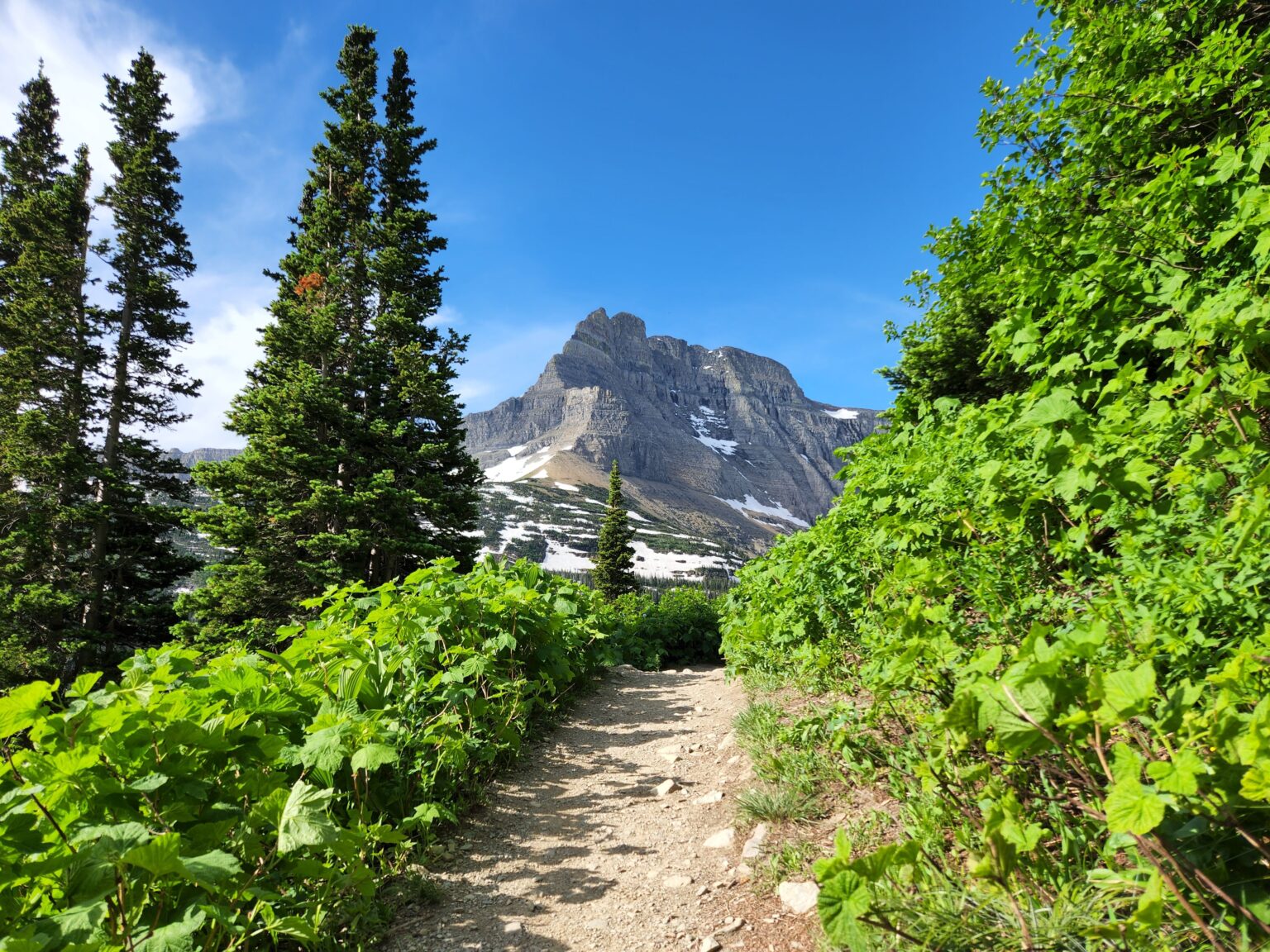
The best Glacier National Park hiking trails are Highline, Grinnell Glacier, Avalanche Lake, and Hidden Lake. Highline follows a cliff ledge along the Continental Divide. Grinnell Glacier climbs to a turquoise lake below a shrinking glacier. Avalanche Lake is an easy forest walk to a waterfall-ringed lake. Hidden Lake starts right at Logan Pass. Glacier has over 700 miles of trails in Montana, but the season is short, roughly July to mid-September, because snow blocks the high country the rest of the year. This is also serious grizzly country, so bear safety is not optional.
Glacier rewards planning more than most parks. The season is short, the crowds are heavy, and the logistics around the Going-to-the-Sun Road shape every hike.
Quick Trail Comparison
| Trail | Distance | Difficulty | Best for |
| Avalanche Lake | About 5.9 miles | Moderate | Best easy-ish hike, forest and lake |
| Hidden Lake Overlook | About 2.7 miles | Easy to moderate | Big views from Logan Pass |
| Trail of the Cedars | About 1 mile | Easy | Accessible boardwalk loop |
| Highline Trail | About 11.8 miles | Strenuous | The iconic cliff-ledge hike |
| Grinnell Glacier | About 10.6 miles | Strenuous | Turquoise lake, glacier views |
| Iceberg Lake | About 9.7 miles | Strenuous | Icebergs in a cirque |
| Ptarmigan Tunnel | About 10.3 miles | Strenuous | A tunnel through the mountain |
| St. Mary and Virginia Falls | About 2.8 miles | Easy to moderate | Waterfalls |
| Apgar Lookout | About 7.1 miles | Moderate | Views over Lake McDonald |
| Piegan Pass | About 9 miles | Strenuous | High alpine pass |
| Swiftcurrent Pass | About 13.8 miles | Very strenuous | Big day, huge scenery |
| Baring Falls | About 1.4 miles | Easy | Short waterfall walk |
The Big Four
1. Highline Trail
The most famous hike in Glacier. It starts at Logan Pass and follows a narrow ledge cut into the cliff along the Continental Divide.
The first section has a rock wall on one side and a steep drop on the other, with a cable to hold. It is not technical, but it is exposed. About 11.8 miles point to point, usually hiked one way with the shuttle back.
2. Grinnell Glacier
A climb to a milky turquoise lake sitting below the Grinnell Glacier. The color comes from glacial rock flour in the water.
About 10.6 miles round trip. You can shorten it by taking the boats across two lakes at the start, which many people do.
3. Avalanche Lake
The best hike for people who do not want a huge day. About 5.9 miles round trip through old-growth cedar forest to a lake ringed with waterfalls.
It starts from the Trail of the Cedars, which is accessible, so you can do a short version too.
4. Hidden Lake Overlook
Starts right at Logan Pass, the high point of the Going-to-the-Sun Road. About 2.7 miles round trip to a stunning overlook, often with mountain goats nearby.
Because it starts at the busiest spot in the park, parking is the challenge, not the trail.
The Going-to-the-Sun Road Problem
Almost every famous Glacier hike connects to this one road, and it shapes your whole trip.
- The road is only fully open for a short season, usually late June or early July through mid-October, depending on snow clearing.
- Vehicle reservations are required to drive it in peak season. They sell out.
- A free shuttle runs the length of the road and reaches major trailheads, including Logan Pass. It is often the best way to hike point-to-point routes like the Highline.
- Logan Pass parking fills before 8am in summer.
Check current road status and reservation rules on the official National Park Service site before your trip. This is the single most important piece of Glacier planning.
Bear Safety: Not Optional Here
Glacier has one of the densest grizzly populations in the lower 48. Bear safety is a real requirement, not a formality.
- Carry bear spray and know how to use it. Keep it accessible, not buried in your pack.
- Make noise on the trail, especially near streams, dense brush, and blind corners.
- Hike in groups where you can. Groups are rarely involved in serious bear encounters.
- Never approach wildlife, and give any bear a very wide berth.
- Store food properly and never leave it unattended.
This is normal practice in Glacier and locals take it seriously. So should you.
When to Hike in Glacier
| Season | Conditions |
| June | High trails still snow-covered. Going-to-the-Sun Road often not fully open |
| July to August | Peak season. Everything open, wildflowers, crowds, reservations required |
| September | Best. Fewer crowds, stable weather, early color. Some services wind down |
| October to May | Most high country closed by snow. Limited access |
Early September is the sweet spot. The high trails are still open, the crowds thin after Labor Day, and the weather is often stable. Just know that services start closing and the road can shut with early snow.
What to Bring
- Bear spray. The single most important item.
- Layers. Alpine weather changes fast, and passes are cold and windy even in summer.
- Rain gear. Storms roll in quickly.
- More water than you expect, plus a way to filter more.
- Traction and caution for snow patches, which linger on high trails into July.
FAQ
What is the best hike in Glacier National Park? The Highline Trail is the most famous, following a dramatic cliff ledge along the Continental Divide. Grinnell Glacier is the best for scenery, ending at a turquoise glacial lake. For an easier option, Avalanche Lake is the standout.
When is the best time to hike in Glacier? July through mid-September, because snow blocks the high country the rest of the year. Early September is often the best, with thinner crowds and stable weather, though services begin closing and early snow can shut the road.
Do I need a reservation for Glacier National Park? In peak season you need a vehicle reservation to drive the Going-to-the-Sun Road, and these sell out. A free shuttle runs the road and reaches major trailheads. Check the official National Park Service site, since the rules change each year.
Is Glacier National Park dangerous for bears? Glacier has one of the densest grizzly populations in the lower 48 states. Bear encounters are a real consideration. Carry bear spray, make noise, hike in groups, and never approach wildlife. With these precautions, hiking is safe and common.
How hard is the Highline Trail? It is strenuous at about 11.8 miles, usually hiked one way with the shuttle back. It is not technically difficult, but the first section is a narrow ledge with a steep drop and a cable handhold, so it is not for those with a serious fear of heights.
Your Next Step
Sort the Going-to-the-Sun Road first. Get your vehicle reservation the moment they open, or plan to use the shuttle, because nearly every great Glacier hike depends on reaching that road.
Then buy bear spray before you arrive, and aim for early September if your dates allow. That combination gives you open trails, manageable crowds, and the safety margin this park genuinely requires.