


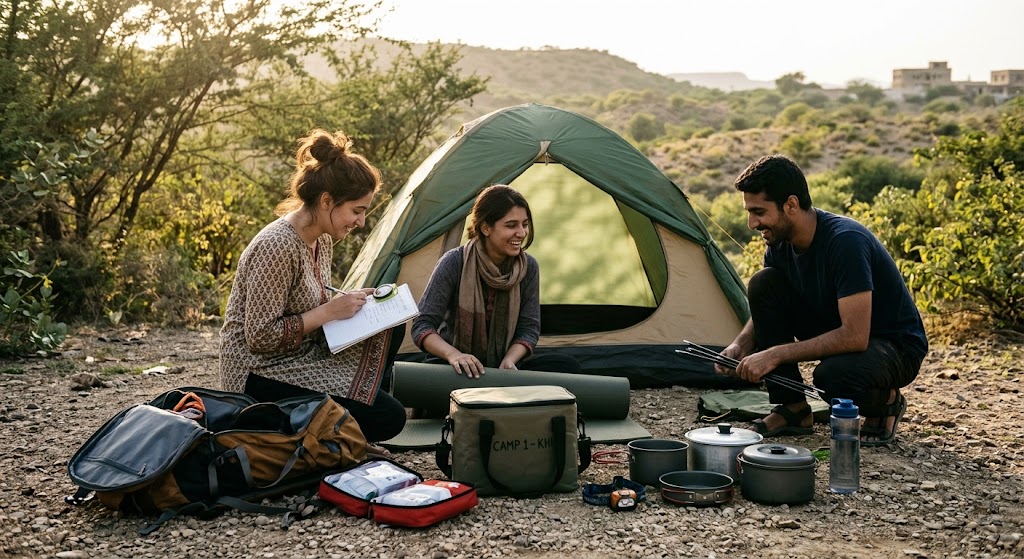
Camping is a great way to enjoy nature, spend time with family and friends, and take a break from everyday routines. However, your first camping trip can feel overwhelming if you do not know what to pack. Forgetting essential items such as a sleeping bag, flashlight, or drinking water can make the experience uncomfortable.
A practical camping checklist helps you organize your gear, prepare for changing weather, and avoid carrying unnecessary items. You do not need to buy every camping product available. Beginners can start with a few reliable essentials and add specialized equipment as they gain experience.
This guide covers the most important camping essentials, clothing, cooking supplies, safety equipment, and personal items to pack. Whether you are planning a weekend at a developed campground or a simple overnight outdoor adventure, this camping gear list will help you prepare with confidence.

Camping Checklist for Beginners: Essential Gear
Before leaving home, organize your equipment into categories. This makes it easier to check what you have and identify anything you still need.
1. Shelter and Sleeping Equipment
Your shelter protects you from weather, insects, and other outdoor conditions. Choose equipment suited to the expected temperature, campsite rules, and number of campers.
Essential items include:
- Tent with suitable capacity
- Tent poles, stakes, and guylines
- Footprint or groundsheet, if appropriate
- Sleeping bag rated for expected temperatures
- Sleeping pad or air mattress
- Pillow or compact travel pillow
- Mallet for tent stakes, if needed
- Repair kit suitable for your shelter
Check your tent before departure. Practice setting it up at home so you understand how the poles, rainfly, and stakes fit together.
For sleeping comfort, choose a sleeping bag based on expected nighttime temperatures rather than daytime weather alone. A sleeping pad also helps provide insulation from the ground.
2. Clothing and Footwear
The right clothing helps you stay comfortable when temperatures change. Even during warm-weather trips, nights may become chilly or unexpected rain may occur.
Pack these items according to your destination and forecast:
- Moisture-managing shirts
- Comfortable trousers or hiking pants
- Warm layers such as a fleece or sweater
- Waterproof jacket or raincoat
- Extra socks and underwear
- Comfortable hiking shoes or trail footwear
- Sandals or camp shoes
- Hat or cap
- Sleepwear
- Extra clothing stored in a waterproof bag
Avoid relying entirely on cotton clothing during cold or wet conditions because it can stay damp and lose insulating ability.
Beginner tip: Dress in layers so you can add or remove clothing as the temperature changes.
Camping Gear List: What to Pack
Use this table as a quick overview of the main equipment you may need.
| Category | Essential Items | Why You Need Them |
|---|---|---|
| Shelter | Tent, stakes, rainfly | Protection from weather |
| Sleeping | Sleeping bag, sleeping pad, pillow | Warmth and comfort |
| Lighting | Headlamp, flashlight, spare batteries | Visibility after dark |
| Cooking | Stove, fuel, lighter or matches | Preparing meals |
| Food and water | Drinking water, meals, reusable bottles | Hydration and nutrition |
| Clothing | Layers, rain jacket, extra socks | Comfort in changing weather |
| Hygiene | Toothbrush, soap, toilet paper | Personal cleanliness |
| Safety | First-aid kit, whistle, emergency light | Handling common emergencies |
| Navigation | Offline map, compass, phone | Finding routes and locations |
| Storage | Dry bags, rubbish bags | Keeping belongings organized |
Your final packing list will depend on campsite facilities. A developed campground may provide drinking water, toilets, picnic tables, and cooking facilities, while a remote site may require you to bring everything.
Cooking and Food Essentials
Eating well can make a camping trip much more enjoyable. Beginners should plan simple meals that require minimal preparation and equipment.
3. Cooking Equipment
Depending on the campground and local fire restrictions, consider packing:
- Camping stove suitable for outdoor use
- Correct fuel for the stove
- Lighter or matches stored safely
- Pot and frying pan
- Cooking utensils
- Reusable plates and bowls
- Cups and cutlery
- Can opener, if needed
- Food storage containers
- Cooler with ice or suitable cold storage
- Dishwashing supplies
- Drinking water containers
Never use a camping stove, charcoal grill, or fuel-burning cooking device inside a tent or enclosed shelter. These devices can produce carbon monoxide, a dangerous gas that may be fatal.
Check fire restrictions before your trip. Some locations prohibit open flames or require designated cooking areas.
4. Food and Drinks
Choose foods that are easy to transport, prepare, and store safely.
Useful options include:
- Oatmeal and cereal
- Bread or wraps
- Nuts and trail mix
- Fresh fruit that travels well
- Canned or packaged meals
- Rice or pasta
- Energy bars
- Tea, coffee, or other preferred drinks
- Snacks for hikes
- Ingredients for planned dinners
Plan meals before shopping so you do not bring too much food. Keep perishable items at safe temperatures and store food securely according to local wildlife guidance.
5. Drinking Water
Water is one of the most important camping essentials. Carry enough drinking water for your planned activities and check whether potable water is available at the campsite.
Your needs will depend on temperature, activity level, duration, and individual requirements. Hot weather and strenuous hiking increase the importance of planning hydration carefully.
For remote trips, consider an appropriate water treatment method, such as a suitable filter or purification system. Natural water should not be assumed safe to drink just because it looks clear.
Personal Hygiene and Toiletries
Maintaining basic hygiene helps keep you comfortable and reduces the risk of certain illnesses during a trip.
6. Toiletry Checklist
Pack the following items as needed:
- Toothbrush and toothpaste
- Biodegradable or campsite-appropriate soap
- Shampoo
- Toilet paper
- Hand sanitizer
- Quick-drying towel
- Sunscreen
- Insect repellent
- Personal medication
- Menstrual products, if needed
- Small rubbish bags
- Wet wipes, where appropriate
Follow campground rules for washing and wastewater disposal. Even products labeled biodegradable should not automatically be used in lakes, streams, or directly on the ground.
For campsites without toilets, learn the local rules for human waste disposal before leaving home.
Safety and Emergency Equipment
A good camping checklist includes equipment for minor injuries, unexpected weather, and navigation problems.
7. First-Aid Kit
Carry a first-aid kit suitable for your group and activities. It may include:
- Adhesive bandages
- Sterile gauze and dressings
- Medical tape
- Antiseptic wipes
- Blister-care supplies
- Tweezers
- Disposable gloves
- Any required personal medication
- Basic first-aid instructions
Check expiry dates and replace used items. If you have a medical condition or are traveling with children, prepare additional supplies based on your needs.
8. Navigation and Communication
Do not rely on mobile phone coverage being available everywhere.
Consider carrying:
- Fully charged mobile phone
- Offline maps
- Paper map of the area
- Compass, if you know how to use it
- Portable power bank
- Emergency whistle
- Headlamp or flashlight
- Emergency contact information
For remote or higher-risk trips, consider whether a satellite communicator or personal locator beacon is appropriate.
Tell someone your planned route and expected return time if you will be camping away from developed facilities.
9. Weather Protection
Weather can change quickly, particularly in mountains, forests, and exposed areas.
Check the forecast before departure and monitor official alerts when possible. Pack rain protection, warm layers, and sun protection suitable for the destination.
If severe weather is expected, reconsider your plans. Know where you can find appropriate shelter and how to leave the area if conditions become unsafe.
Beginner Camping Tips to Make Your Trip Easier
The right equipment is important, but good preparation also helps prevent avoidable problems.
10. Choose a Beginner-Friendly Campsite
For your first trip, consider a developed campground with marked pitches, toilets, drinking water, and clear access routes.
Check booking requirements, vehicle access, quiet hours, fire rules, and whether pets are permitted. Read the site’s official information before departure.
A campsite with basic facilities can help you learn camping skills without managing too many challenges at once.
11. Check Your Equipment at Home
Test your tent, lanterns, stove, and sleeping equipment before leaving. Make sure the tent has all its poles and stakes and that batteries are charged.
Check that your stove is compatible with its fuel and follow the manufacturer’s instructions. Do not test fuel-burning equipment inside your home or tent.
12. Arrive Before Dark
Setting up a campsite is much easier in daylight. Aim to arrive early enough to pitch your tent, organize your supplies, and become familiar with the area.
If you expect to arrive late, check the campground’s arrival rules and have lighting readily available.
13. Pack Light but Smart
It is tempting to bring too much equipment for a first camping trip. Extra items can make packing, transport, and campsite organization more difficult.
Prioritize essential shelter, sleep, food, water, clothing, and safety equipment. Add comfort items only after you know you have room for them.
14. Leave No Trace
Respect nature and other campers by following the principles of responsible outdoor recreation.
- Pack out rubbish and leftover food.
- Use established campsites and trails where required.
- Avoid damaging plants or disturbing wildlife.
- Keep noise at a considerate level.
- Follow local fire restrictions.
- Dispose of human waste according to local rules.
- Leave natural objects where they belong.
Responsible camping helps protect the environment and keeps outdoor areas enjoyable for future visitors.
Printable Camping Checklist
Use this quick list before departure.
- Tent, poles, stakes, and rainfly
- Sleeping bag and sleeping pad
- Pillow and warm layers
- Weather-appropriate clothing and footwear
- Headlamp or flashlight with spare batteries
- Stove, compatible fuel, and cooking equipment
- Meals, snacks, and safe drinking water
- Reusable bottles and food containers
- First-aid kit and personal medication
- Sunscreen and insect repellent
- Toiletries and towel
- Phone, power bank, and offline maps
- Weather forecast and campsite reservation details
- Rubbish bags and cleaning supplies
- Emergency contacts and planned route details
Adjust the list for the number of campers, trip length, expected weather, and available facilities.
Frequently Asked Questions
1. What should a beginner bring camping?
Start with a tent, sleeping bag, sleeping pad, suitable clothing, lighting, drinking water, food, cooking equipment, toiletries, and a first-aid kit. Add navigation and emergency equipment appropriate to your destination.
2. What are the most important camping essentials?
Shelter, a suitable sleeping system, safe drinking water, food, weather-appropriate clothing, lighting, and first-aid supplies are among the most important essentials.
3. What food is best for beginner camping?
Choose simple meals such as oatmeal, sandwiches, pasta, rice, packaged meals, and snacks. Consider cooking time, storage needs, dietary requirements, and how easily food can be transported.
4. How many clothes should I pack for a weekend camping trip?
Pack enough clothing for the expected weather and activities, including extra socks, underwear, warm layers, and rain protection. Keep spare clothing dry and adjust the amount for your destination.
5. Do I need special equipment for my first camping trip?
Not necessarily. A basic camping setup is often enough for a developed campground. You can rent or borrow suitable equipment before investing in expensive gear.
6. How do I stay safe while camping?
Check weather alerts, follow campsite rules, store food securely, carry a first-aid kit, use lighting, and tell someone your plans for remote trips. Never operate fuel-burning stoves or heaters inside a tent.
7. How much water should I bring camping?
Your needs depend on the weather, activity level, trip duration, and available facilities. Plan adequate drinking water for each person and have a reliable treatment method if you will need to use natural water sources.
8. What should I avoid bringing on a camping trip?
Avoid unnecessary bulky items, unsuitable footwear, excessive food, and equipment you do not know how to use. Never bring items that violate campsite rules or create avoidable fire and wildlife risks.
Conclusion
A successful first camping trip starts with preparation, not expensive equipment. This camping checklist helps you organize your shelter, sleeping gear, clothing, food, cooking supplies, hygiene products, and safety essentials before leaving home.
Start with a beginner-friendly campground, check the weather, test your equipment, and plan simple meals. Pack according to your trip length and the facilities available rather than buying every item marketed to campers.
Most importantly, prioritize safety and respect the natural environment. With the right camping essentials and a little practice, you can enjoy a comfortable outdoor experience and build confidence for future adventures.