


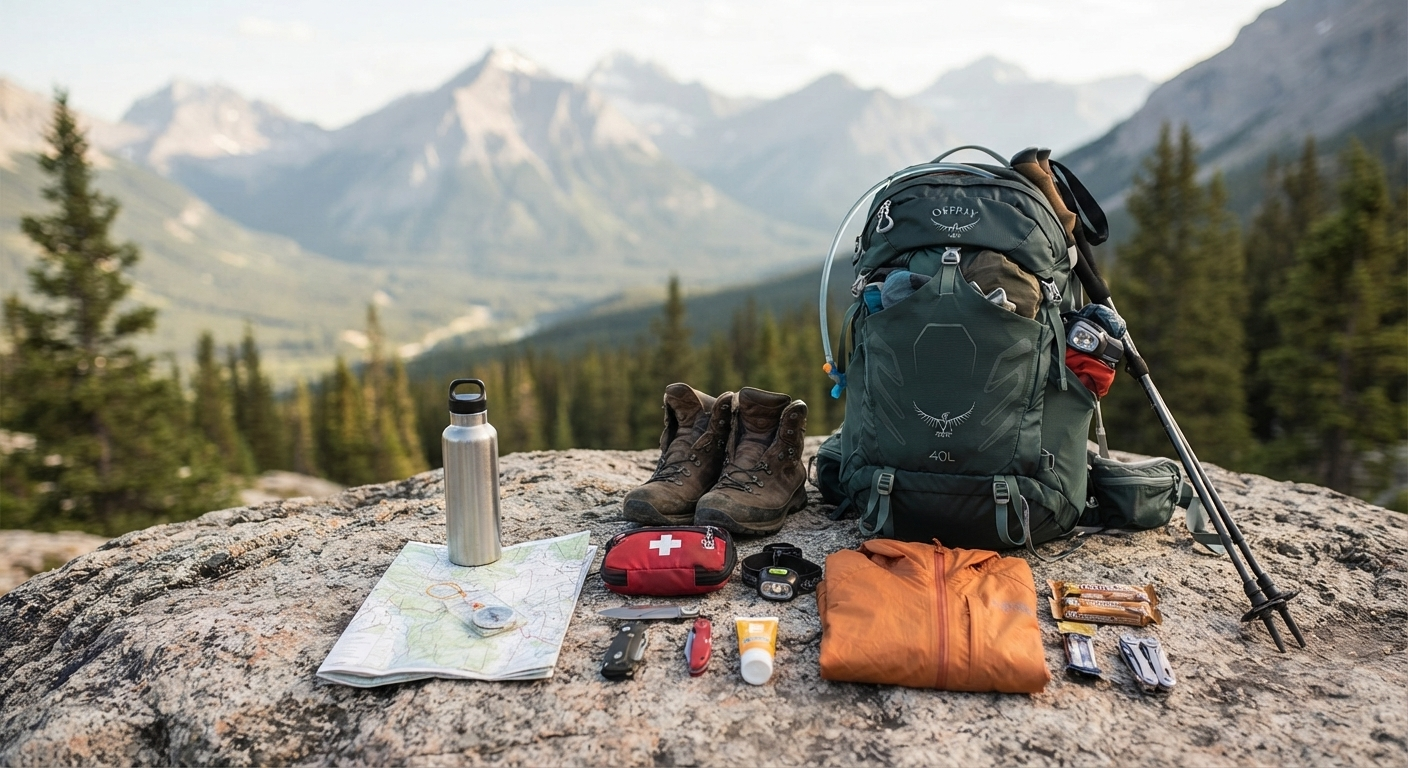
Knowing what to pack for hiking can make the difference between an enjoyable outdoor adventure and a difficult day on the trail. You do not need to carry everything you own, but you should have the right equipment for the trail, weather, distance, and difficulty.
This hiking essentials checklist covers the most important items for day hikes, including navigation tools, water, food, clothing, first aid, sun protection, and emergency gear. The National Park Service recommends carrying the “Ten Essentials” and adjusting your equipment according to the location, weather, activity, and length of the hike.
Whether you are a beginner planning a short trail or an experienced hiker preparing for a longer adventure, this guide will help you build a practical hiking gear checklist.
Hiking Essentials Checklist at a Glance
Here is a quick overview of the most important things to take with you:
| Category | Essential Items | Why You Need Them |
|---|---|---|
| Backpack | Comfortable daypack | Carries your equipment |
| Navigation | Map, compass, GPS/phone | Helps you stay on route |
| Water | Water bottles or hydration system | Prevents dehydration |
| Food | Snacks and extra food | Provides energy |
| Clothing | Layers, rain jacket, extra socks | Protects against changing weather |
| Footwear | Hiking shoes or boots | Provides grip and support |
| Sun Protection | Sunscreen, sunglasses, hat | Protects skin and eyes |
| First Aid | Basic first-aid kit | Handles minor injuries |
| Lighting | Headlamp or flashlight | Useful in darkness or emergencies |
| Emergency Gear | Whistle, emergency shelter, fire starter | Helps in unexpected situations |
| Tools | Multi-tool or knife, repair supplies | Useful for small problems |
| Hygiene | Toilet paper, hand sanitizer, trash bag | Keeps you comfortable and the trail clean |
The exact items you need will depend on the hike. A short local trail may require much less equipment than a remote mountain hike.
1. Choose the Right Hiking Backpack
A good backpack is the foundation of your hiking gear.
For a simple day hike, a small daypack may be enough. REI recommends considering a roughly 10- to 20-liter pack for shorter hikes, while longer outings may require more capacity.
What to Look for in a Hiking Backpack
Choose a backpack that:
- Fits your body comfortably
- Has adjustable shoulder straps
- Provides enough space for your essentials
- Has easily accessible water storage
- Keeps heavier items close to your back
- Includes compartments for small equipment
Avoid choosing a backpack simply because it looks good. Comfort becomes increasingly important as the distance increases.
2. Pack Enough Water
Water is one of the most important hiking essentials.
How much water you need depends on factors such as:
- Temperature
- Hiking distance
- Elevation
- Trail difficulty
- Your individual needs
- Availability of water sources
The National Park Service recommends planning ahead for water needs, especially in hot weather, and notes that some trails may require hikers to carry extra water or treat water from natural sources.
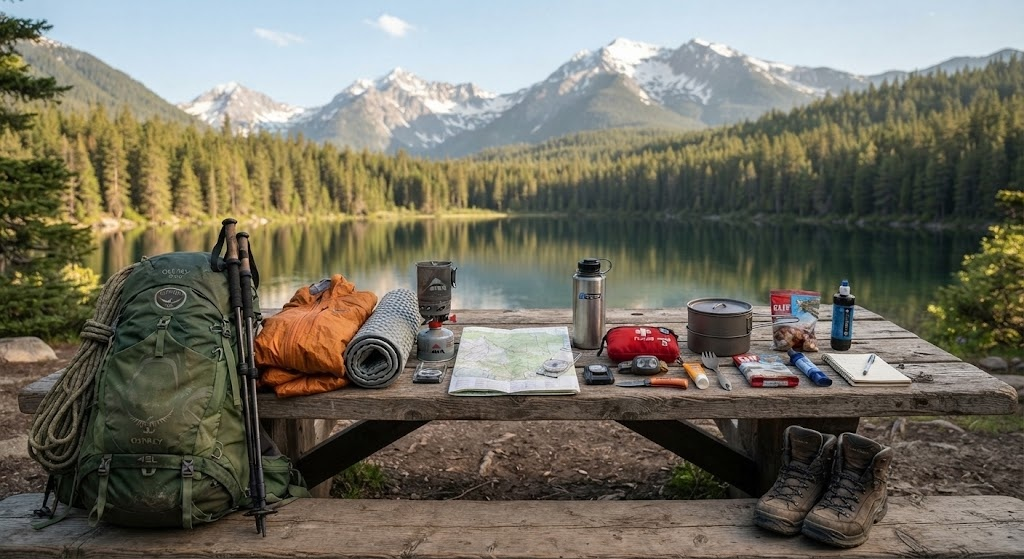
Water Packing Tips
Carry water in:
- Reusable water bottles
- Hydration reservoirs
- Insulated bottles when appropriate
For longer or remote hikes, consider bringing a suitable water-treatment method if reliable water sources are available along the route.
Never assume a stream or lake is automatically safe to drink.
3. Bring Enough Food and Snacks
Hiking uses energy, so food belongs on every serious hiking equipment list.
Good hiking foods are generally:
- Easy to carry
- Easy to eat
- High in useful energy
- Suitable for the weather
- Unlikely to spoil quickly
Good Hiking Snack Ideas
Consider packing:
- Trail mix
- Nuts
- Energy bars
- Dried fruit
- Peanut butter sandwiches
- Crackers
- Fresh fruit
- Jerky
- Granola bars
For longer hikes, bring additional food rather than relying on an exact calculation of what you expect to eat. The National Park Service recommends carrying extra food for unexpected delays.
4. Wear the Right Hiking Footwear
Your feet take most of the impact during a hike, so appropriate footwear is essential.
For established trails, hiking shoes may be enough. More rugged terrain may require hiking boots with additional protection and support.
The National Park Service recommends sturdy footwear appropriate for the terrain and notes that open-toed footwear and flip-flops are not ideal for hiking.
Your Hiking Footwear Should Provide
- Comfortable fit
- Good traction
- Protection from rocks and rough surfaces
- Suitable support
- Weather-appropriate construction
Do not wear brand-new shoes on a long hike without testing them first. Blisters can quickly turn a fun trip into an uncomfortable experience.
5. Pack Weather-Appropriate Clothing
Weather can change quickly, particularly in mountainous or exposed areas.
Your clothing should allow you to add or remove layers as conditions change.
Basic Clothing for Hiking
Your what to pack for hiking list may include:
- Moisture-wicking shirt
- Hiking pants or shorts
- Warm layer
- Lightweight jacket
- Rain shell
- Extra socks
- Hat
- Gloves when appropriate
The National Park Service recommends carrying extra clothing and preparing for changing conditions rather than relying only on the weather at the beginning of the hike.
Why Extra Socks Matter
An extra pair of socks takes little space but can be extremely useful if your feet get wet.
Keeping your feet dry and comfortable can make a major difference during longer hikes.
6. Carry Navigation Equipment
Navigation is one of the most important parts of any hiking essentials checklist.
Even if you know the trail, conditions can change, paths can become confusing, and phone batteries can run out.
The National Park Service recommends navigation equipment such as a map, compass, and GPS system and advises hikers to know how to use their navigation tools before heading out.
Useful Navigation Tools
Carry one or more of these:
- Physical trail map
- Compass
- Smartphone with an offline map
- GPS device
- Route information
- Satellite communicator or personal locator beacon for remote trips
Do not rely entirely on your phone. Cellular service may not be available in remote areas, and batteries can run out.
7. Bring Sun Protection
Sun protection is easy to forget, especially when the weather feels cool.
Your hiking gear checklist should include:
- Sunscreen
- Sunglasses
- Hat
- Sun-protective clothing when appropriate
The National Park Service includes sun protection as one of the Ten Essentials because exposure to UV radiation can damage skin and eyes.
Reapply sunscreen according to the product’s directions, particularly during longer outdoor activities.
8. Carry a First-Aid Kit
A first-aid kit is another essential item, even on relatively easy trails.
You do not need a huge medical kit for a normal day hike. A compact kit can cover common minor problems.
Basic First-Aid Supplies
Consider including:
- Adhesive bandages
- Gauze
- Antiseptic wipes
- Blister treatment
- Medical tape
- Personal medications
- Small scissors
- Disposable gloves
For longer or more remote hikes, your first-aid supplies may need to be more comprehensive.
REI and the National Park Service both recommend carrying first-aid supplies as part of outdoor preparedness.
9. Take a Headlamp or Flashlight
A headlamp may not seem necessary when you start hiking during daylight, but unexpected delays can change your plans.
You might take longer than expected because of:
- Slow hiking
- Taking a wrong turn
- Bad weather
- An injury
- Difficult terrain
- Unexpected stops
A headlamp keeps your hands free while providing light.
Carry spare batteries when appropriate. A phone flashlight can be useful as a backup, but it should not necessarily be your primary light source for a remote hike.
10. Pack Emergency and Safety Equipment
Your hiking equipment list should include a few items specifically for unexpected situations.
Depending on your route, consider:
- Whistle
- Emergency blanket
- Lightweight emergency shelter
- Fire-starting equipment where permitted
- Multi-tool
- Repair tape
- Extra batteries
- Personal locator beacon or satellite communicator for remote areas
The Ten Essentials framework includes navigation, illumination, first aid, fire, shelter, extra food, extra water, extra clothing, sun protection, and tools.
You may not need every item on a short urban trail, but remote hikes require more preparation.
What to Pack for Hiking: Simple Day-Hike Checklist
For a typical day hike, use this checklist before leaving home:
Clothing
- ☐ Hiking shirt
- ☐ Hiking pants or shorts
- ☐ Comfortable hiking socks
- ☐ Extra socks
- ☐ Warm layer
- ☐ Rain jacket
- ☐ Hat
- ☐ Gloves if needed
Food and Water
- ☐ Water
- ☐ Extra water capacity if required
- ☐ Lunch
- ☐ Trail snacks
- ☐ Extra food
Safety
- ☐ First-aid kit
- ☐ Emergency blanket
- ☐ Whistle
- ☐ Headlamp
- ☐ Personal medications
- ☐ Emergency contact information
Navigation
- ☐ Trail map
- ☐ Compass
- ☐ Phone with offline map
- ☐ GPS or other navigation device when appropriate
- ☐ Power bank
Personal Items
- ☐ Identification
- ☐ Cash/card
- ☐ Phone
- ☐ Sunglasses
- ☐ Sunscreen
- ☐ Hand sanitizer
- ☐ Small trash bag
Hiking Gear Checklist for Different Types of Hikes
Not every hike requires the same equipment.
| Type of Hike | Essential Gear | Additional Items |
|---|---|---|
| Short local hike | Water, snacks, phone, basic first aid | Small daypack |
| Half-day hike | Water, food, layers, navigation, first aid | Trekking poles |
| Full-day hike | Full Ten Essentials, extra food and water | Larger daypack, power bank |
| Mountain hike | Navigation, layers, food, water, first aid | Trekking poles, weather protection |
| Rainy-weather hike | Waterproof layer, extra clothing, navigation | Pack cover, waterproof storage |
| Winter hike | Warm layers, navigation, emergency gear | Traction equipment where appropriate |
| Overnight hike | Full safety gear, food, water, shelter | Tent, sleeping bag, sleeping pad, stove |
The farther you go from help and the more challenging the conditions, the more important proper preparation becomes.
How to Pack Your Hiking Backpack
Packing correctly can make your hike more comfortable.
Keep Frequently Used Items Accessible
Items you may need during the hike should be easy to reach.
Keep things such as:
- Snacks
- Water
- Sunscreen
- Rain jacket
- Map
- Phone
in accessible pockets.
Protect Important Items
Keep electronics, documents, and other items that should stay dry in waterproof bags or appropriate protective containers.
Keep Your Pack Organized
Group similar items together instead of throwing everything into the backpack.
For example:
Top/side pockets: Water, snacks, sunscreen, map
Main compartment: Clothing, food, larger equipment
Protected area: Phone, power bank, documents
Emergency section: First-aid and emergency equipment
What Not to Pack for a Hike
Overpacking can make hiking unnecessarily tiring.
Avoid taking things you are unlikely to use unless the route or conditions require them.
You usually do not need:
- Excessive clothing
- Heavy unnecessary electronics
- Large containers
- Multiple pairs of unnecessary shoes
- Bulky items with no practical purpose
However, do not remove genuine safety equipment simply to make your backpack lighter.
The goal is smart packing, not minimal packing.
Hiking Essentials for Beginners
If this is your first hike, keep your setup simple.
Start with:
- Comfortable footwear
- A suitable backpack
- Enough water
- Food and snacks
- Navigation
- Weather-appropriate clothing
- First-aid supplies
- Sun protection
- Headlamp or flashlight
- Basic emergency equipment
Before leaving, check the weather and research the trail. The National Park Service also recommends telling someone where you are going and when you expect to return.
How to Prepare Before a Hike
Packing is only one part of preparation.
Check the Weather
Weather can change quickly. Check the forecast before leaving and make sure your clothing and equipment match the expected conditions.
Research the Trail
Find out:
- Distance
- Elevation gain
- Difficulty
- Terrain
- Expected hiking time
- Water availability
- Cell coverage
- Trail restrictions
Tell Someone Your Plans
For unfamiliar or remote hikes, tell someone where you are going and when you expect to return.
This gives another person useful information if something goes wrong.
Check Your Equipment
Test your headlamp, phone, GPS, water system, and other important equipment before leaving.
The National Park Service recommends checking equipment and learning how to use it before heading out.
Frequently Asked Questions
1. What are the most important hiking essentials?
The most important items include navigation equipment, water, food, suitable clothing, proper footwear, sun protection, first aid, lighting, emergency equipment, and a suitable backpack. Your exact needs depend on the trail and conditions.
2. What should I pack for a short hike?
For a short hike, take water, snacks, a phone, navigation, sun protection, appropriate footwear, basic first aid, and weather-appropriate clothing. Even short hikes can benefit from basic emergency preparation.
3. How much water should I bring hiking?
There is no single amount that works for every hike. Your water needs depend on weather, distance, elevation, intensity, and access to reliable water sources. Plan ahead and carry additional water when conditions require it.
4. Do I need hiking boots for every hike?
No. Footwear should match the trail. Comfortable hiking shoes may work well on established trails, while rugged terrain may require more protective footwear. Avoid flip-flops and open-toed shoes on trails where they provide inadequate protection.
5. What is the Ten Essentials hiking system?
The Ten Essentials is a widely used outdoor-preparedness framework covering navigation, sun protection, insulation, illumination, first aid, fire, tools, food, water, and shelter. The exact equipment should be adjusted to the trip.
6. Should I bring a first-aid kit on a day hike?
Yes. Even on a simple day hike, a small first-aid kit can help with minor injuries, blisters, cuts, and other common problems. Longer or remote hikes may require more comprehensive supplies.
Conclusion
A good hiking essentials checklist does not need to be complicated. The goal is to carry the equipment that keeps you comfortable, prepared, and safe for the specific trail you are exploring.
Start with the basics: water, food, appropriate footwear, clothing, navigation, sun protection, first aid, lighting, and emergency equipment. Then adjust your hiking gear checklist based on the distance, weather, terrain, season, and how far you will be from help.
Most importantly, do not pack only for the conditions you hope to experience. Prepare for reasonable changes in weather, unexpected delays, and minor emergencies. The Ten Essentials framework is a useful starting point, but your what to pack for hiking list should always reflect the actual trip.
With the right preparation, you can spend less time worrying about what you forgot and more time enjoying the trail.