


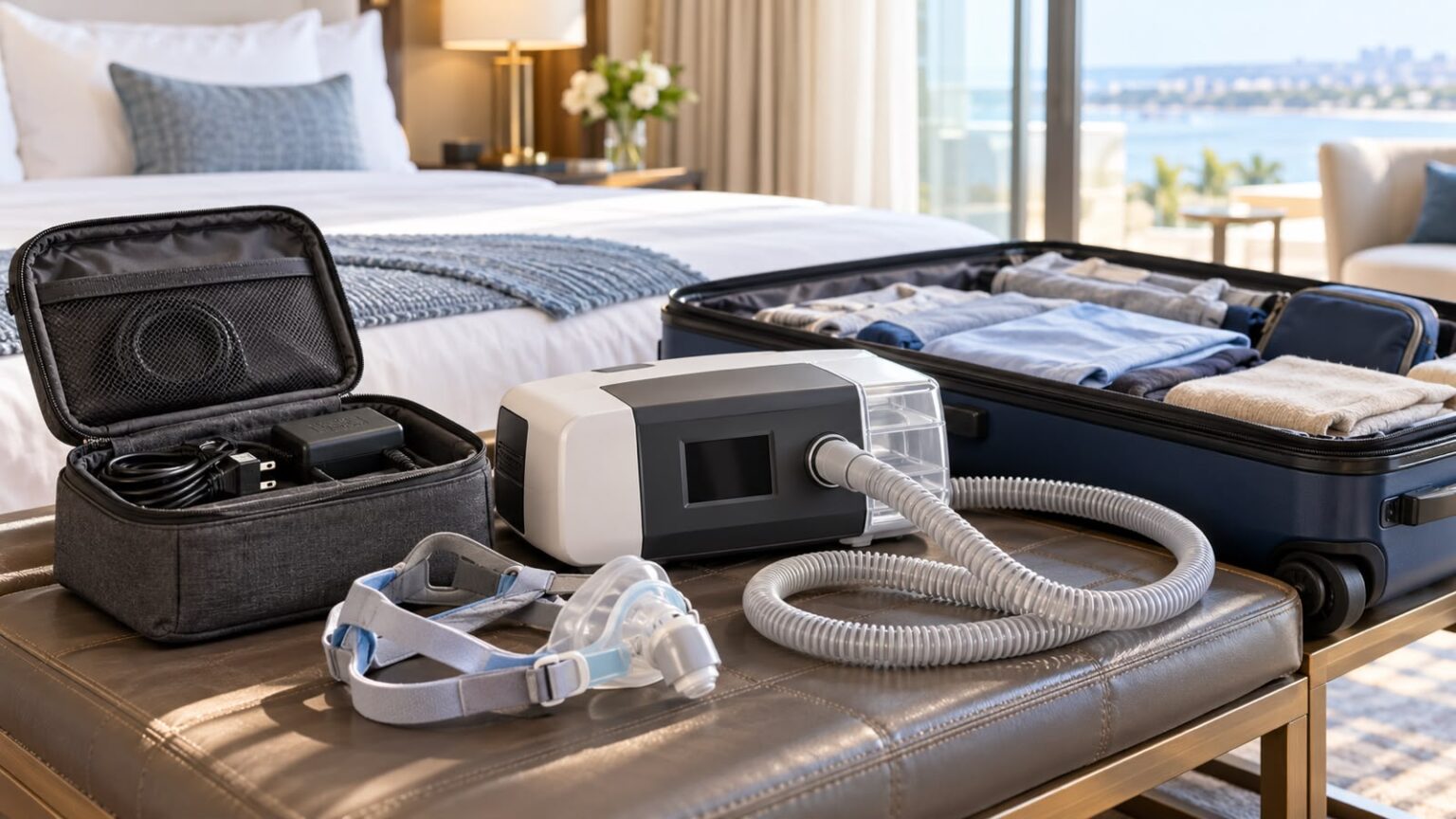
CPAP Travel: What You Need to Know
Traveling with a CPAP machine does not have to be difficult. Whether you are taking a short weekend trip, going on vacation, traveling for work, or taking a long international flight, a little preparation can make the experience much easier.
A CPAP machine is an important part of nightly sleep therapy for many people. Leaving it at home may mean missing treatment during your trip, so it is generally better to plan ahead and take your equipment with you.
The good news is that modern CPAP machines are designed to be portable. Many models are compact enough to fit into a dedicated travel case, and some manufacturers also offer smaller travel CPAP options.
This guide explains how to prepare for cpap travel, what to pack, how to travel by airplane or car, and how to use your equipment comfortably while away from home.
Why CPAP Travel Requires Some Planning
A CPAP machine is more than just the main device. Your complete setup may include a mask, tubing, power supply, filters, humidifier components, and other accessories.
When traveling, forgetting one small part can make it difficult to use your machine properly.
Planning ahead helps you:
- Keep all essential equipment together
- Protect the machine from damage
- Make airport security easier
- Prepare for different power outlets
- Avoid problems at your hotel
- Continue your normal sleep routine
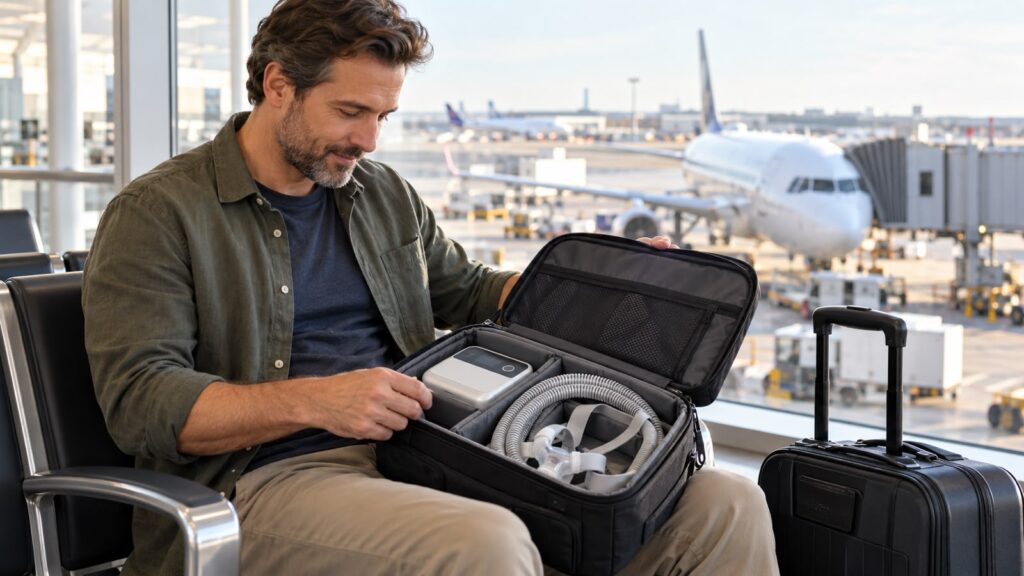
Creating a simple travel checklist before leaving can save time and reduce stress.
What to Pack for CPAP Travel
Before leaving home, gather everything you normally use with your CPAP machine.
Essential CPAP Items
Your basic travel kit should include:
| Item | Why You Need It |
|---|---|
| CPAP machine | Main therapy device |
| CPAP mask | Delivers the prescribed air |
| Tubing | Connects the mask to the machine |
| Power supply | Provides electricity to the machine |
| Filters | Helps maintain the machine’s air intake |
| Travel case | Protects and organizes equipment |
| Humidifier parts | Needed if you use humidification |
| Distilled water | May be needed for compatible humidifiers |
| Backup supplies | Useful for unexpected problems |
Check your machine’s instructions before traveling, especially if you use a humidifier, battery, or other accessories.
Keep Important Items Together
Rather than putting individual CPAP components in different bags, keep them together in your CPAP travel case.
This makes it easier to find everything when you reach your destination and reduces the chance of accidentally leaving something behind.
Traveling With CPAP Machine on an Airplane
Air travel is one of the most common concerns for people using CPAP therapy.
When traveling with CPAP machine equipment, keep the machine and essential accessories easily accessible rather than placing them deep inside checked luggage.
A CPAP machine is delicate medical equipment, so carrying it with you can also help reduce the risk of damage or loss associated with checked baggage.
Should You Put Your CPAP in Carry-On Luggage?
Many travelers choose to carry their CPAP machine in the cabin rather than checking it.
Before your trip, check the airline’s current baggage and medical-equipment policies. Airlines can have different procedures regarding CPAP machines, additional bags, and onboard use.
If you plan to use the CPAP machine during the flight, contact the airline before traveling to confirm its requirements.
At Airport Security
Airport security screening procedures can vary by country and airport.
Keep your CPAP machine accessible so you can remove it from your bag if security personnel request it.
It can also be helpful to keep the machine’s travel case and accessories organized. If you have documentation from your healthcare provider regarding your CPAP therapy, you may choose to carry it with your travel documents, although requirements vary.
Can You Use a CPAP Machine on a Plane?
Some airlines allow passengers to use approved CPAP devices during flights, while others may have specific requirements.
If you want to sleep using your CPAP during a flight, check with the airline well before your departure date.
Ask about:
- Whether CPAP use is permitted during the flight
- Whether the machine needs airline approval
- Whether a battery is required
- Whether electrical outlets are available
- Whether specific documentation is needed
Do not assume that a power outlet will always be available or suitable for your device.
CPAP Travel by Car
Road trips can be simpler because you have more control over your luggage and power arrangements.
However, you still need to plan where you will sleep and how you will power your machine.
Tips for a Road Trip
For cpap travel by car:
- Keep the machine in a protective case.
- Avoid leaving it in a hot vehicle for long periods.
- Pack the correct power adapter.
- Keep the mask and tubing clean.
- Bring backup supplies when possible.
- If you plan to camp, arrange an appropriate power source beforehand.
Never assume that a vehicle’s power system will automatically be compatible with your CPAP machine. Check your manufacturer’s instructions before using an inverter, battery, or other power solution.
Choosing a Travel CPAP Machine
If you travel frequently, you may consider a dedicated travel CPAP machine.
Travel models are generally designed to be smaller and easier to transport than many standard home machines.
Before purchasing one, consider:
Size and Weight
A compact machine takes up less room in your luggage and may be easier to carry through an airport.
Power Options
Look at the machine’s supported power requirements and whether compatible battery solutions are available.
Humidification
Some travel CPAP machines use different humidification systems or may not include a traditional water chamber.
If humidification is important for your comfort, check the manufacturer’s specifications carefully.
Mask Compatibility
Make sure your preferred mask and tubing are compatible with the travel machine.
Prescription Requirements
CPAP equipment may involve medical-device and prescription requirements depending on where you live and where you purchase the equipment. Check applicable local requirements before buying.
How to Use Your CPAP in a Hotel
Hotels can make traveling with CPAP machine equipment relatively easy with a little preparation.
When you arrive, choose a stable location near the bed for the machine. Make sure there is enough space around the device for proper airflow according to the manufacturer’s instructions.
Check the Power Outlet
Place the machine close enough to an outlet without stretching or putting unnecessary pressure on the power cord.
If the outlet is far away, a suitable extension solution may help, but make sure it is appropriate for your machine and follows the manufacturer’s safety instructions.
Ask the Hotel About Your Room
If you need a specific room setup, contact the hotel before your trip. You can ask about outlet locations or other practical requirements.
CPAP Cleaning While Traveling
Keeping your equipment clean is important even when you are away from home.
You do not need an elaborate cleaning routine for a short trip. The goal is to continue following the cleaning and maintenance instructions provided by your CPAP manufacturer and healthcare provider.
Simple Travel Cleaning Tips
- Wash your hands before handling the mask.
- Keep the mask and tubing in a clean bag when not in use.
- Follow the manufacturer’s cleaning instructions.
- Allow components to dry properly when required.
- Replace filters and other supplies according to recommended schedules.
- Avoid using cleaning products that are not recommended for your equipment.
If you are staying somewhere without easy access to clean water, plan your cleaning supplies before leaving.
What About CPAP Humidifiers?
Humidifiers can improve comfort for some CPAP users, but they can also make traveling more complicated.
Water chambers can take up additional space, and travelers may need to consider the availability of suitable water at their destination.
If your CPAP machine has a humidifier, check the manufacturer’s instructions for travel. Some travel machines offer alternative humidification systems designed to reduce the need for carrying water.
Do not put unapproved liquids or substances into your CPAP humidifier.
International CPAP Travel
International trips require a little extra preparation because electrical systems and travel conditions can differ between countries.
Check Voltage Requirements
Before traveling internationally, check whether your CPAP power supply supports the voltage used at your destination.
You may need a suitable plug adapter. A plug adapter changes the physical plug shape, while a voltage converter performs a different function. Do not assume that you need a converter without checking your equipment’s specifications.
Carry Essential Documents
Keep important medical and equipment information with your travel documents.
If your machine was prescribed, having relevant prescription or device information available can be useful if you need replacement supplies while abroad.
CPAP Travel Checklist
Use this quick checklist before leaving home:
| Checklist Item | Packed? |
|---|---|
| CPAP machine | ☐ |
| Mask | ☐ |
| Tubing | ☐ |
| Power supply | ☐ |
| Filters | ☐ |
| Humidifier components | ☐ |
| Travel case | ☐ |
| Backup mask or supplies | ☐ |
| Appropriate plug adapter | ☐ |
| Battery, if needed | ☐ |
| Cleaning supplies | ☐ |
| Prescription/device information | ☐ |
Take a few minutes to check the list before leaving. It is much easier to find a missing item at home than after arriving at your destination.
Common CPAP Travel Mistakes to Avoid
Even experienced travelers can forget important details.
Packing the Machine in Checked Luggage
Keeping essential medical equipment with you can reduce the risk of losing it with checked baggage.
Forgetting the Power Supply
The machine itself is useless if you arrive without the correct power adapter or supply.
Not Checking Airline Rules
Airline requirements can vary. Check the current rules before your flight.
Leaving the Machine in Extreme Temperatures
CPAP machines contain electronic components that may be affected by unsuitable temperatures. Follow the manufacturer’s storage and operating guidance.
Forgetting Backup Supplies
A spare mask cushion, filter, tubing, or other essential item can be helpful if something becomes damaged during your trip.
Frequently Asked Questions
Can I travel with a CPAP machine?
Yes. CPAP machines are portable medical devices, and many people take them on vacations, business trips, and road trips. Check your airline’s current requirements if you are flying.
Should I take my CPAP machine on a plane?
If you need your CPAP therapy while traveling, carrying the machine with you can help ensure that you have access to it when you need it. Check the airline’s baggage and medical-device policies before your flight.
Can I put my CPAP machine in checked luggage?
You can check equipment depending on the airline’s policies, but many travelers prefer to keep their CPAP machine with them to reduce the risk of loss or damage.
Can I use a CPAP machine in a hotel?
Yes. A hotel room can generally be used for CPAP therapy as long as you have a suitable power source and enough space to safely position the machine.
Do I need distilled water when traveling with a CPAP?
This depends on your machine and humidifier. Follow the manufacturer’s instructions regarding water type and humidifier use.
Can I use a CPAP machine while camping?
CPAP use while camping is possible with appropriate power planning. Check your machine’s requirements and use a compatible battery or power solution recommended for the device.
Is a travel CPAP machine necessary?
No. A dedicated travel CPAP machine is not necessarily required. Many standard CPAP machines can be transported in their protective cases. A travel model may simply offer a more compact option for frequent travelers.
Conclusion
CPAP travel becomes much easier when you prepare your equipment before leaving home. Your machine, mask, tubing, power supply, filters, and other essential accessories should be organized and protected throughout the journey.
For air travel, check your airline’s current policies and keep essential CPAP equipment accessible. For road trips and hotels, pay attention to power requirements and choose a safe, convenient location for your machine.
When traveling with CPAP machine equipment internationally, remember to check electrical requirements, bring necessary adapters, and follow the manufacturer’s instructions for your specific device.
With a simple packing checklist and a little advance planning, you can continue your normal CPAP routine while enjoying your trip with fewer unnecessary problems