


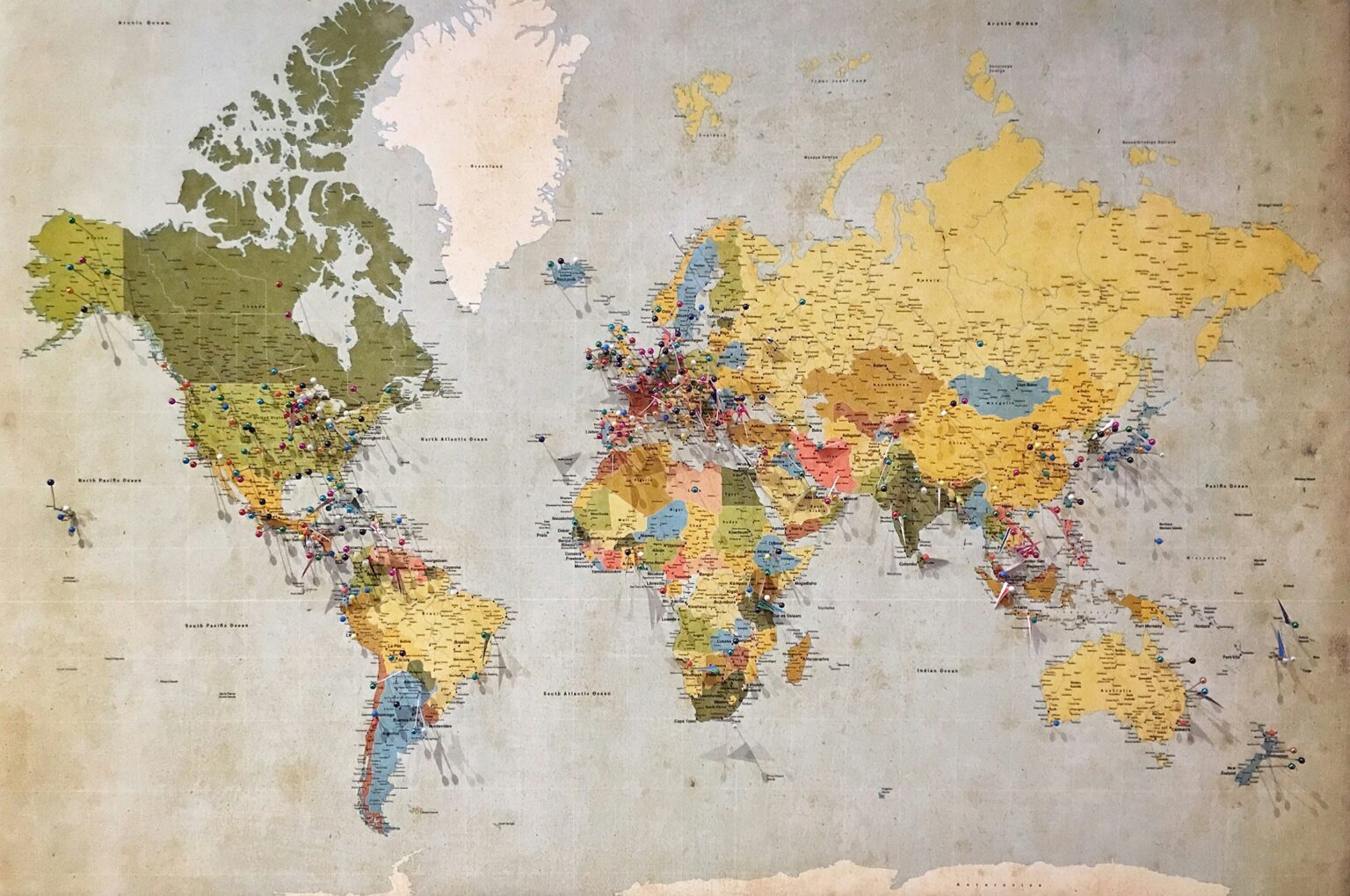
There are 195 countries in the world today. This includes 193 member states of the United Nations, plus 2 non member observer states: the Holy See (Vatican City) and the State of Palestine.
This is the most widely used answer. But it is not the only correct one, and understanding why takes a closer look at how countries actually get recognized.
The Short Answer vs the Long Answer
Ask ten people how many countries are in the world, and you may get five different numbers, all defensible.
The short answer: 195, based on the United Nations count.
The long answer: the real number ranges from 193 to over 210, depending on which list you trust and why you are counting in the first place.
This gap exists because no single global body has final authority over what counts as a country. The UN, FIFA, the International Olympic Committee, and even individual governments each draw the line differently.
Why the Country Count Is Not One Simple Number
Most legal definitions of a country trace back to the Montevideo Convention of 1933. Under this standard, a state needs:
- A permanent population
- A defined territory
- A functioning government
- The capacity to enter into relations with other states
Monaco, with under 40,000 residents, meets these points despite its tiny size. Nauru, with a land area of about 8 square miles, also qualifies. Size is not the issue. Recognition is.
A place can meet every point on that list and still be denied recognition by dozens of governments for political reasons. That is exactly what happens with Taiwan, Kosovo, and a handful of others.
The 193 UN Member States
The United Nations has 193 full member states, and this is the number most people mean by default when they ask how many countries are in the world.
Joining the UN is not automatic. A country must apply, then get a recommendation from the 15 member Security Council, followed by a two thirds vote in the General Assembly. Any one of the five permanent Security Council members (the US, UK, France, Russia, China) can block an application with a veto.
South Sudan is the most recent country to complete this process, joining in July 2011 after separating from Sudan.
The 2 UN Observer States
Two places sit just outside full membership, holding observer status instead:
- The Holy See (Vatican City) – granted observer status in 1964. It can speak at the UN and take part in some proceedings but does not vote.
- The State of Palestine – granted observer status in 2012, after years as a non-member entity.
Add these two to the 193 members, and you get the commonly cited total of 195.
Places Left Out of the UN Count Entirely
Several places govern themselves independently in practice but remain outside the UN list altogether:
| Place | Population (approx.) | Why It Is Excluded |
|---|---|---|
| Taiwan | 23 million | China claims it; the UN recognizes Beijing as representing it |
| Kosovo | 1.8 million | Recognized by about half of UN members, not all |
| Western Sahara | 600,000 | Disputed territory, claimed by Morocco |
| Somaliland | 5 million+ | Declared independence from Somalia in 1991, still unrecognized |
| Transnistria | 350,000 | Breakaway region of Moldova, recognized by no UN member |
Taiwan alone has a larger population than about two thirds of existing UN member states, which shows how much politics, not size or governance, drives these decisions.
How Other Organizations Count Countries
Sports and travel bodies are not bound by UN politics, so their lists often run higher.
| Organization | Total Count | Why It Differs |
|---|---|---|
| United Nations | 195 | 193 members + 2 observers |
| FIFA (soccer) | 211 | Counts territories like England, Scotland, and Wales as separate teams |
| International Olympic Committee | 206 | Similar approach, includes some non-sovereign territories |
| Round the world travel trackers | 197 to 215+ | Some count every UN member plus Taiwan and Kosovo, others go further to include partially recognized states |
This is why England can field its own national soccer team at the World Cup even though it is not a UN member state. FIFA is not making a political statement. It is just using its own membership rules.
Countries by Continent
Here is the breakdown of the 195 UN-recognized countries by continent. A few nations, like Russia and Turkey, sit across two continents and get counted differently depending on the source.
| Continent | Number of Countries | Example Countries |
|---|---|---|
| Africa | 54 | Nigeria, Egypt, South Africa, Kenya |
| Asia | 48 | China, India, Japan, Indonesia |
| Europe | 44 | Germany, France, Italy, Poland |
| North America | 23 | United States, Canada, Mexico, Panama |
| South America | 12 | Brazil, Argentina, Chile, Peru |
| Oceania | 14 | Australia, New Zealand, Fiji, Papua New Guinea |
Africa has more countries than any other continent, largely due to decolonization through the 1950s and 1960s, when dozens of nations gained independence from European colonial rule within a short span. South America, by contrast, has the fewest countries despite covering a massive landmass, since most of the continent split into large nations early in its colonial history rather than fragmenting further.
Why the Number Changes Over Time
Country counts shift, though slowly.
How new countries form:
- A region declares independence and eventually wins recognition, as South Sudan did in 2011
- A larger state dissolves into smaller ones, as the Soviet Union did in 1991, producing 15 new countries
- A colony gains full sovereignty from its governing power
How the count can shrink:
- Two states merge, as North and South Yemen did in 1990
- A region is absorbed back into another country
The United Nations started with just 51 founding member states in 1945. The jump to 193 reflects nearly 80 years of independence movements, most heavily concentrated in Africa and Asia during the mid 20th century.
What Counts as a Country, Really
Legal standards aside, recognition ultimately comes down to two things: who governs a territory in practice, and who else agrees to treat that government as legitimate.
Kosovo illustrates this well. It has its own government, currency, military, and borders. It is recognized by around 100 UN member states, including the US and most of the EU. It is not recognized by Russia, China, Spain, or Serbia, the country it separated from. Because UN membership requires broad agreement, Kosovo stays outside the 193, even though it functions as a country in almost every practical sense.
Quick Reference: Which Number Should You Use
- School reports or general writing: 195 (193 UN members + 2 observers)
- UN voting and diplomacy topics: 193
- Travel country-counting: many trackers use 197, adding Taiwan and Kosovo to the UN list
- Sports comparisons: FIFA (211) or IOC (206)
Frequently Asked Questions
How many countries are there in the world in 2026? There are 195 countries in the world in 2026: 193 UN member states plus 2 UN observer states, the Holy See and the State of Palestine.
Is Taiwan counted as a country? Taiwan is not a UN member state, since the United Nations recognizes China as representing it. Taiwan governs itself independently but is left out of the standard 195 count.
Which continent has the most countries? Africa has the most, with 54 recognized countries, a result of many nations gaining independence from colonial rule in the mid 20th century.
What was the last country to join the United Nations? South Sudan joined the United Nations in July 2011, becoming the most recent country to gain full UN membership after separating from Sudan.
Why do some sources say there are 211 countries? That figure usually comes from FIFA, which counts territories like England, Scotland, and Wales as separate members, unlike the UN’s country-based system.
Final Thoughts
The number 195 covers the vast majority of situations: it is the UN’s count of 193 member states plus 2 observer states, and it is what most teachers, journalists, and reference sources rely on.
But the real story is that country counting is never just about geography. It is about politics, recognition, and history. If you are writing for a general audience, 195 will serve you well. For anything sports or travel related, check the specific organization’s list, since their numbers are built on different rules entirely.