


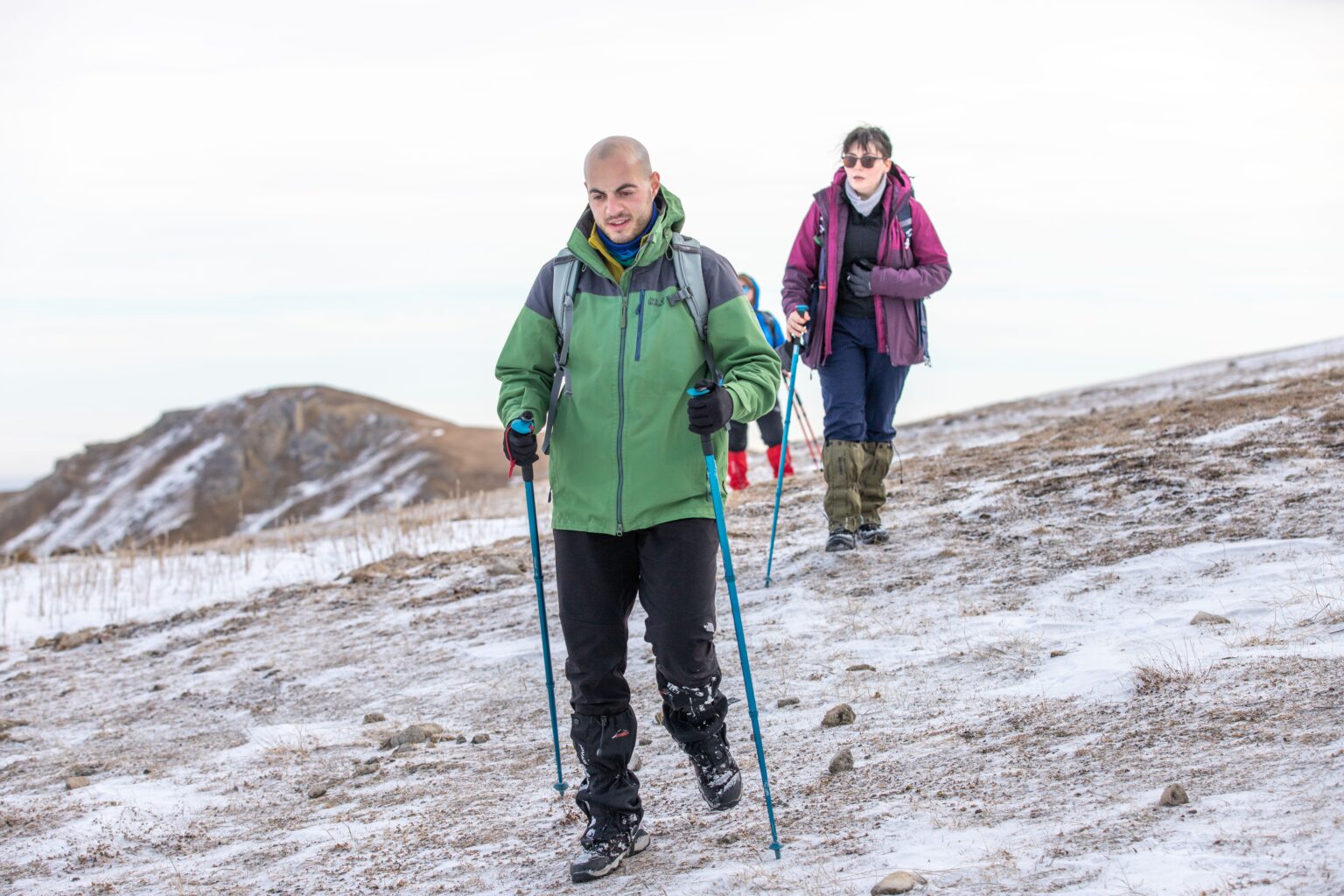
What you wear hiking should follow three layers: a wicking base layer next to your skin, an insulating mid layer such as fleece, and a waterproof shell on the outside. Add hiking trousers, wool or synthetic socks, and broken-in boots or trail shoes with real grip. The one absolute rule is no cotton, including cotton socks and underwear, because cotton holds sweat, chafes, and pulls heat from your body when wet. In summer you might wear only the base layer. In winter you wear all three and add a hat and gloves.
The goal is not to be perfectly dressed at the trailhead. It is to be able to adjust as you heat up climbing and cool down at the top.
The Layering System Explained
Layer 1: Base Layer
Job: move sweat away from your skin.
This layer sits against you. Its only real task is moisture management. Even in cold weather, sweat that stays on your skin will chill you.
Material: merino wool or synthetic. Never cotton.
Fit: close, but not compressive. It needs contact with skin to wick.
Layer 2: Mid Layer
Job: trap warm air.
Material: fleece is the standard. Light down or synthetic insulation for colder conditions. A wool jumper works too.
You take this on and off constantly. It is the layer you adjust most.
Layer 3: Outer Shell
Job: block wind and rain.
Material: a waterproof breathable jacket with a hood.
Important distinction: water-resistant is not waterproof. A water-resistant jacket handles a light shower for a few minutes. In sustained rain it wets through. If you hike anywhere with real weather, buy properly waterproof.
Wind matters as much as rain. Wind strips heat away fast, and a shell that blocks it makes a huge difference on exposed ridges.
Why Cotton Is the One Thing to Avoid
There is a saying among hikers: cotton kills. That is dramatic, but the reasoning is sound.
- Cotton absorbs water and holds it rather than moving it away
- Wet cotton against skin conducts heat away from your body far faster than dry fabric
- It chafes badly when wet, particularly under a pack and at the waistband
- It dries extremely slowly
In warm weather it is merely uncomfortable. In cold or wet conditions, wet cotton contributes to hypothermia. That is why the rule is absolute rather than a preference.
Check your socks and underwear first. Those are the cotton items people forget about, and they cause the most immediate problems.
Bottom Half
| Option | Best for | Watch out for |
| Hiking trousers | Most conditions | Get some stretch and a gusseted crotch |
| Convertible zip-offs | Variable weather | Zips can rub |
| Hiking leggings | Mild weather, easy trails | Less protection from brush and rock |
| Shorts | Hot, open trails | Sun, insects, scratchy vegetation |
| Jeans | Nothing | Cotton, heavy, terrible when wet |
Jeans are the most common mistake on easy trails. They are cotton, they are heavy, and once wet they stay wet and chafe.
Footwear and Socks
Boots or Trail Shoes
- Mid-cut boots are the versatile default: some ankle support, keeps grit out
- Trail shoes are lighter and cooler, better for dry, well-maintained trails
- Whatever you choose, break them in before a long hike
Fit matters more than any feature. Thumb-width space at the toe, no heel lift, and try them on in the afternoon when your feet are slightly swollen.
Socks
- Wool or synthetic, never cotton
- Tall enough to clear your boot collar
- Carry a spare pair, always
Socks are the cheapest way to dramatically improve a hike.
What to Wear by Conditions
Hot and Sunny
- Lightweight wicking t-shirt, or better, a long-sleeve sun shirt
- Light trousers or shorts
- Brimmed hat and sunglasses
- Light layer packed anyway, since summits are colder
A long-sleeve sun shirt outperforms sunscreen on exposed trails. It does not sweat off and you do not have to reapply it.
Rain
- Genuinely waterproof jacket with a hood
- Quick-drying trousers
- Waterproof cover or dry bag for your pack
- Spare socks, sealed in a bag
Cold
- Thermal base layer, top and bottom
- Fleece or insulated mid layer
- Windproof and waterproof shell
- Hat and gloves, since a lot of heat is lost from the head and extremities
- Thicker wool socks, but not so thick they make your boots tight
Snow
Everything under cold, plus:
- Gaiters to keep snow out of your boots
- Insulated waterproof boots
- Sunglasses, since snow glare is intense
- A spare pair of gloves
Wind
Wind is underrated. It strips heat far faster than still cold air. A windproof shell, a hat, and a buff make an enormous difference on exposed ground.
What to Carry, Not Wear
You will heat up within ten minutes of starting. Start slightly cold, and carry:
- Your mid layer, until you need it
- Rain shell, always, even on a clear forecast
- Hat and gloves in cold months
- Spare socks
- A buff or neck gaiter, which is the most versatile small item you can pack
Start cold. Hikers call this “be bold, start cold.” If you are comfortable at the trailhead, you will be too hot within a mile.
Common Mistakes
- Wearing jeans. Cotton, heavy, awful wet.
- Cotton socks. The fastest route to blisters.
- Brand new boots on a long hike. Break them in first.
- No rain layer because the forecast was clear. Mountain weather changes fast.
- Overdressing at the trailhead, then sweating through the base layer, then getting cold at the top.
- Forgetting a hat. Sun in summer, warmth in winter.
FAQ
What should I wear hiking for the first time? A wicking t-shirt, comfortable trousers with some stretch, wool or synthetic socks, and trainers or trail shoes with decent grip. Pack a fleece and a rain jacket. Avoid cotton, particularly jeans and cotton socks, and you will be fine on most day hikes.
Why can’t you wear cotton hiking? Cotton absorbs sweat and holds it against your skin, staying wet, chafing, and pulling heat from your body as it evaporates. In cold or wet conditions this contributes to hypothermia, which is why hikers avoid it entirely and use merino wool or synthetics instead.
Can you hike in jeans? You can, but it is a poor choice. Jeans are cotton, so they are heavy, restrict movement, chafe when wet, and take a very long time to dry. Any quick-drying hiking trouser will be more comfortable and safer in wet or cold weather.
What should I wear hiking in hot weather? A lightweight wicking top or a long-sleeve sun shirt, light trousers or shorts, a brimmed hat, and sunglasses. Long sleeves often beat sunscreen on exposed trails. Carry a light layer anyway, since summits and shade are cooler than the trailhead.
How many layers should I wear hiking? Up to three: a wicking base layer, an insulating mid layer, and a waterproof shell. In hot weather you may only wear the base layer and carry the others. The system exists so you can adjust as you warm up climbing and cool down at rest.
Your Next Step
Check what you already own before buying anything. Most people have a synthetic t-shirt, a fleece, and a rain jacket, which is the whole system already.
Then replace your socks. Wool or synthetic hiking socks are inexpensive, and they prevent more trail misery per pound spent than anything else you can buy.