


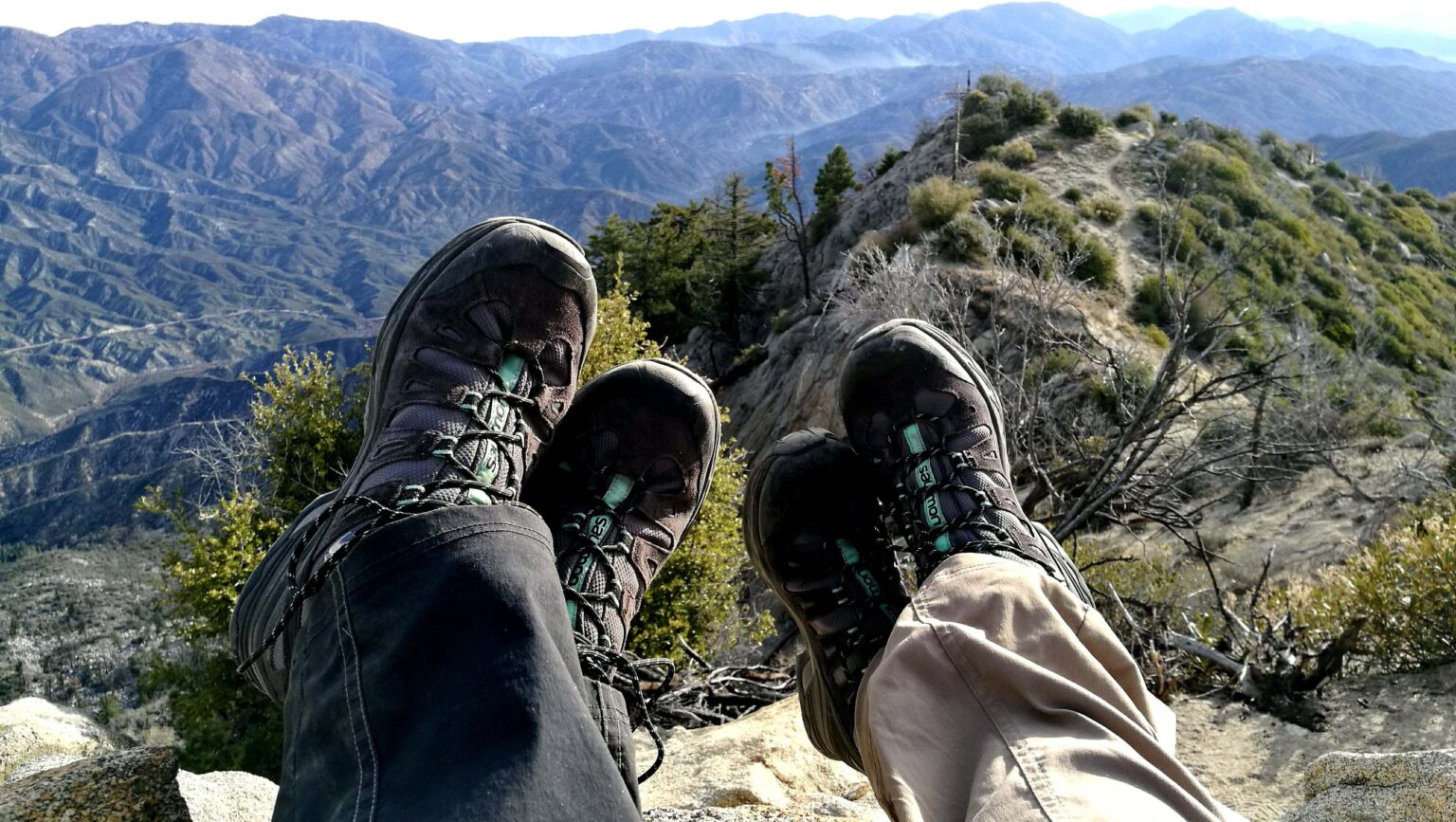
Waterproof hiking boots use a membrane, usually GORE-TEX or a brand’s own version, sandwiched inside the boot. The membrane has pores too small for liquid water to pass through but large enough to let sweat vapor escape. That keeps rain, puddles, and wet grass out. The tradeoff is real: waterproof boots breathe less than non-waterproof ones, so your feet get hotter and sweatier in warm weather. They are the right choice for wet, cold, and muddy conditions, and the wrong choice for hot, dry desert hiking.
Most people buy waterproof boots by default. For a lot of hiking, that is a mistake. Here is how to decide.
How Waterproof Boots Actually Work
The membrane is a thin layer bonded inside the boot’s upper.
- Pores in the membrane are smaller than a water droplet but larger than a molecule of water vapor.
- Liquid water cannot get in. Sweat vapor can get out.
- “Waterproof” is not the same as “sealed.” Water still enters over the top of the boot if you step in deep enough.
That last point matters. A waterproof boot is only waterproof up to the ankle collar. Step into a stream above that line and the boot fills, and then it drains far more slowly than a non-waterproof boot would.
When You Need Waterproof Boots
| Condition | Waterproof helpful? |
| Rain and wet trails | Yes, clearly |
| Snow and slush | Yes |
| Mud and boggy ground | Yes |
| Morning dew on overgrown trails | Yes |
| Cold weather generally | Yes, wet feet get cold fast |
| Hot dry desert | No, they trap heat |
| Summer hiking in dry climates | Usually no |
| Deep river crossings | No, they fill and stay full |
The simple rule: if your hikes are cold, wet, or muddy, buy waterproof. If they are hot and dry, buy breathable non-waterproof shoes and accept that your feet get wet occasionally, because they dry within an hour.
The Honest Downsides
Sales pages rarely mention these.
1. They breathe less. Even the best membrane restricts airflow compared with mesh. In warm weather your feet sweat more, which can actually make them wetter from the inside than rain would from the outside.
2. They dry slowly. Once water gets in over the top, the membrane that kept water out now keeps it in. A soaked waterproof boot can take a day or more to dry. A mesh trail runner dries in a couple of hours.
3. They cost more than the equivalent non-waterproof model.
4. The waterproofing degrades. The membrane and the outer coating wear over time, especially if the boots are left dirty. They are not waterproof forever.
What to Look For When Buying
Fit Comes First
Fit matters more than every other feature combined. A waterproof boot that rubs will ruin a hike faster than wet feet ever will.
- Try boots on in the afternoon, when your feet are slightly swollen, as they will be on the trail.
- Wear the socks you actually hike in.
- Check for heel lift. Your heel should stay put when you walk. Lift causes blisters.
- Leave thumb-width space at the toe. On descents your foot slides forward, and a tight toe box means bruised or lost toenails.
- Walk a decline. Many outdoor shops have a ramp. Use it.
Cut Height
| Cut | Best for |
| Low (shoe) | Light loads, good trails, hot weather, faster hiking |
| Mid | The all-round choice. Some ankle support, keeps debris out |
| High | Heavy packs, rough terrain, deep snow and mud |
Mid-cut is the right answer for most people most of the time.
Membrane Type
GORE-TEX is the best-known membrane, and many brands also make their own in-house versions that perform comparably at lower cost. In practice, fit and construction quality matter more than which membrane brand is inside.
Outsole and Grip
Look at the tread pattern. Deeper, more widely spaced lugs shed mud better and grip soft ground. Shallower, denser tread grips rock better.
Weight
Heavier boots are more supportive and more durable. Lighter boots are less tiring over distance. There is a genuine tradeoff, and the right answer depends on your pack weight and mileage.
Waterproof Boots vs Trail Runners
This is the real debate among hikers, and both sides have a point.
Waterproof boots win when: it is cold, wet, snowy, or muddy, when you carry a heavy pack, or when the terrain is rough and you want ankle support.
Non-waterproof trail runners win when: it is hot and dry, when you cross streams frequently, when you cover long distances, or when you value drying speed over staying dry.
Many long-distance hikers deliberately choose non-waterproof shoes for exactly the drying-speed reason.
⚠️ YOUR PRODUCT PICKS GO HERE
Insert your tested recommendations in this section, with affiliate links. Suggested structure:
| Category | Your pick |
| Best overall waterproof boot | |
| Best budget waterproof boot | |
| Best for wide feet | |
| Best lightweight option | |
| Best for heavy packs | |
| Best for women |
For each pick, cover: who it suits, the fit character (narrow or wide), the cut height, and one honest drawback. Reviews that name a drawback convert better than reviews that do not.
Brands that make well-regarded waterproof hiking boots include Merrell, Salomon, KEEN, Lowa, La Sportiva, Oboz, Columbia, and Vasque. Verify current models, specs, and prices before publishing, since lineups change every year.
Caring for Waterproof Boots
Waterproofing fails faster from neglect than from use.
- Clean off mud after every hike. Dirt clogs the membrane’s pores and blocks breathability.
- Dry them at room temperature. Never on a radiator, by a fire, or in direct sun. Heat destroys adhesives and membranes.
- Remove the insoles to dry so moisture escapes properly.
- Reapply a durable water repellent treatment when water stops beading on the surface. That beading is the first thing to fail, and it is fixable.
- Store them somewhere dry, not in a damp garage or a sealed bag.
FAQ
Are waterproof hiking boots worth it? It depends entirely on your climate. In cold, wet, or muddy conditions they are clearly worth it, since wet feet get cold and blister. In hot, dry conditions they are usually the wrong choice, because they trap heat and breathe less than mesh alternatives.
Do waterproof hiking boots make your feet sweat? Yes, more than non-waterproof shoes. The membrane that blocks water also restricts airflow. In warm weather, sweat can build up faster than the membrane can release it, which is why breathable non-waterproof shoes are often better in heat.
How long do waterproof hiking boots stay waterproof? It varies with use and care, but the outer water repellent coating fails first, usually well before the membrane does. When water stops beading on the surface, clean the boots and reapply a repellent treatment. Keeping them clean is the single biggest factor.
Can you wear waterproof boots for river crossings? They are not ideal. Waterproof boots only keep water out up to the ankle collar. If water goes over the top, the membrane traps it inside and the boots take a very long time to dry. Fast-draining non-waterproof shoes are better for frequent crossings.
What is the difference between GORE-TEX and other waterproof membranes? GORE-TEX is the best-known membrane brand, and many manufacturers use their own in-house equivalents that perform similarly, often at lower cost. For most hikers, the boot’s fit and build quality make a bigger difference than which membrane is inside.
Your Next Step
Answer one question before you shop: are your hikes usually wet and cold, or hot and dry? That single answer decides whether you want a waterproof membrane at all, and it matters more than any brand comparison.
Then go try boots on in person in the afternoon, wearing your hiking socks, and walk a decline ramp. Fit causes far more ruined hikes than water ever does, and it is the one thing you cannot judge from a product page.